Uncategorized

Homebuyers’ Guide: Essential Documents to Verify Before Booking a Flat

Homebuyers’ Guide: Essential Documents to Verify Before Booking a Flat The arrest of a Thane-based real estate developer for allegedly selling flats with forged permits has once again underlined the importance of due diligence in property transactions. According to Maharashtra police, the developer is accused of using fake revised construction permits and maps to build and sell apartments beyond the sanctioned limits in Mira Bhayander, near Mumbai—duping buyers of crores of rupees. Legal experts say the case is a reminder that buyers must carefully verify all property-related documents before committing funds. “Homebuyers must verify the ownership title and get legal due diligence done before investing,” said CA Aditya Zantye, partner at AKORD & CO. Below are five key checks every homebuyer should carry out before booking their dream home: 1. Title Deed and Ownership Records Ensure the developer has a clear and marketable title to the land. Documents such as the conveyance deed, property card, 7/12 extract, property tax receipts, and water connection bills should be examined. Verification with the local sub-registrar’s office can help rule out disputes or encumbrances. 2. Building Plan Approval Municipal authorities must sanction the project’s layout and construction plan. Buyers should compare the approved plan with the builder’s version to avoid falling prey to illegal or altered layouts. 3. Commencement and Completion Certificates A Commencement Certificate (CC) confirms that construction has been legally permitted, while a Completion or Occupancy Certificate (OC) ensures the project has been built as per sanctioned norms and is fit for possession. 4. RERA Registration Under the Real Estate (Regulation and Development) Act, all projects must be registered with the respective state RERA. In Maharashtra, homebuyers can use the MahaRERA portal to verify project details, developer credentials, and compliance records. 5. No-Objection Certificates (NOCs) Legitimate projects require NOCs from departments including fire safety, environment, water supply, and electricity. Missing or forged NOCs can lead to future legal disputes or safety hazards. Experts caution that while property purchases often involve emotional decisions, buyers must prioritize legal due diligence to safeguard their investment. Related Posts All Posts L&T Realty Strategically acquires Land in Panvel signals New Growth Trajectory May 19, 2025/Read More Godrej Properties Bags 717 Crores worth 6.54 Acres land parcel from CIDCO inKharghar Navi Mumbai May 19, 2025/Read More

Homebuyers’ Guide: Essential Documents to Verify Before Booking a Flat Read More »

How to Invest in Real Estate in India: A Simple Guide (2025 Edition)

How to Invest in Real Estate in India: A Simple Guide (2025 Edition) Are you looking to build steady, long-term wealth? If yes, real estate investment remains one of the most trusted ways to grow money in India. From buying a piece of land in a developing area to earning passive rental income through commercial spaces, property investments offer both security and profitability. But the big questions are: Where do I start? Which type of property is best—residential, commercial, or land? How do I invest with minimal risk and maximum return? If these questions have crossed your mind, you’re not alone! The world of real estate can feel overwhelming due to changing trends, market dynamics, and economic shifts. The good news is—you don’t need crores to get started. New-age models like fractional ownership and SPV-based investments have made real estate more accessible than ever before. This guide will walk you through the basics of property investment in India, helping you choose the right option based on your goals, budget, and risk appetite. Understanding Real Estate Investment At its core, real estate refers to land and any permanent structures attached to it—homes, offices, malls, or even farmland. It’s different from personal property (like cars or equipment) because it usually appreciates over time. Here are some important distinctions: Land → The natural surface and everything on it—trees, water, minerals. Real Estate → Land plus the permanent structures built on it. Real Property → The land, structures, and the legal rights to own/usethem. When you invest in real estate, you can either: Buy directly (a flat, land, or office space) and earn income through rent or appreciation. Invest indirectly (via REITs or PropTech platforms) and enjoy returns without directly managing a property.   Types of Real Estate Investments in India Let’s explore the most popular ways to invest in Indian real estate: 1️⃣ Residential Properties These include apartments, villas, and independent houses. A residential property can generate steady rental income and appreciate over time. ✔️ Best for: First-time investors looking for stability.✔️ Demand driver: India’s growing urban population. 2️⃣ Commercial Properties Think office spaces, shops, malls, hotels, or restaurants. Commercial properties usually bring higher rental yields (6–9%) compared to residential (2–3%). Businesses often sign long-term leases, ensuring steady cash flow. ✔️ Best for: Investors seeking higher and consistent returns.✔️ Demand driver: India’s booming startup and corporate ecosystem. 3️⃣ Industrial Properties Factories, warehouses, storage units, or R&D centers. With the rise of e-commerce and logistics hubs, demand for industrial spaces has skyrocketed. ✔️ Best for: Investors aiming for long-term stability with lower maintenance. 4️⃣ Land Investments Buying land in a developing location and holding it for appreciation is one of the oldest strategies. It can also be used for farming, leasing, or future development. ✔️ Best for: Patient investors who don’t mind waiting for returns. 5️⃣ Real Estate Investment Trusts (REITs) If you want to invest in real estate without owning property directly, REITs are a great option. They allow you to buy shares in real estate portfolios (like offices, malls, or IT parks) and earn dividends. ✔️ Best for: Small investors who want exposure to real estate.✔️ Bonus: Listed on stock exchanges (easy entry & exit). 6️⃣ Fractional Ownership (Next-Gen Investing 🚀) This is where Balaji BrickPlatter PropTech Pvt. Ltd. comes in. Instead of buying a property worth several crores, you can invest fractionally with a group of co-investors. The property is held under a Special Purpose Vehicle (SPV), ensuring legal transparency and security. 💡 Example: A premium office space worth ₹20 crore can be split among 100 investors, each owning a fraction. Investors earn rental income and benefit from capital appreciation—without the burden of managing the property. ✔️ Best for: Individuals, NRIs, and HNIs who want premium assets with low entry barriers.✔️ Demand driver: Millennials and NRIs seeking diversified portfolios with steady returns. 📊 Key Factors to Consider Before Investing Location → Properties near airports, IT hubs, and metro corridors grow faster. Market Trends → Study supply-demand, rental yields, and appreciation potential. Legal Structure → Ensure proper documentation and SPV-based ownership if investing fractionally. Exit Strategy → Plan when and how you’ll exit (resale, REITs, or SPV exit routes). Risk Appetite → Residential = safer, Commercial = higher yield, Fractional = balance of both. ✅ Final Thoughts Investing in real estate in India can be your gateway to steady income, portfolio diversification, and long-term wealth creation. The best part? You don’t need to invest alone. With fractional ownership and SPV-based models, even premium properties are now within reach of regular investors. At Balaji BrickPlatter, our mission is to democratize property ownership—making it accessible, secure, and profitable for individuals, NRIs, HNIs, and institutions. 🚀 Whether you want to co-invest in commercial assets, buy pre-leased properties, or explore new-age PropTech opportunities, your journey starts here. Related Posts All Posts Top Benefits of Fractional Ownership for First-Time Investors May 16, 2025/Read More What is Fractional Ownership in Real Estate & Why It’s Booming in India? May 16, 2025/Read More

How to Invest in Real Estate in India: A Simple Guide (2025 Edition) Read More »

Complete NRI Guide to Investing in Fractional Ownership Real Estate in India

Complete NRI Guide to Investing in Fractional Ownership Real Estate in India With increasing disposable incomes and a strong desire to stay financially connected to their homeland, Non-Resident Indians (NRIs) have long considered Indian real estate a safe and profitable investment option. Traditionally, this meant purchasing full ownership of residential or commercial properties. However, challenges such as high capital requirements, regulatory complexities, and property management issues often deterred or delayed these investments. Today, the emergence of fractional ownership real estate in India is transforming the investment landscape for NRIs. By allowing individuals to co-own premium properties – ranging from commercial spaces to holiday homes—fractional investment platforms like BrickPlatter are making Indian real estate accessible, manageable, and rewarding for global investors. Through an SPV (Special Purpose Vehicle) model, NRIs can earn rental income and capital appreciation from Grade-A properties without needing to buy an entire asset. This comprehensive guide explores how NRIs can benefit from India’s fast-growing fractional real estate model, the legal and financial frameworks involved, and why this modern investment path is gaining popularity among global Indians. 1. What is Fractional Ownership in Indian Real Estate? Fractional ownership allows multiple investors to jointly own a high-value property. Each investor holds a share in the property through a company or SPV, and they earn rental income and capital appreciation proportional to their investment. This model is ideal for premium commercial and residential properties that might otherwise be unaffordable for single investors. For NRIs, this is a chance to invest in Grade-A assets in top Indian cities like Mumbai, Bengaluru, Gurugram, Pune, Goa, and more—starting from just ₹10 lakhs. 2. NRIs Should Consider Fractional Ownership Lower Entry Barrier: Instead of investing crores, NRIs can enter the Indian real estate market with fractional investments starting as low as ₹10 lakhs. Hassle-Free Management: Platforms like BrickPlatter manage tenant sourcing, legal compliance, maintenance, and tax documentation. Diversification: NRIs can diversify their real estate portfolio across cities and asset types (commercial, residential, resorts, hotels). Regular Income: Rental income from pre-leased properties offers a stable cash flow, which is directly transferred to the NRI’s account. Asset Appreciation: NRIs benefit from capital appreciation at the time of property exit or resale. Safe & Regulated: Investment is routed via SPVs, ensuring clarity in ownership and legal protection. 3. Legal Eligibility & Documentation for NRI Investors NRIs are legally permitted to invest in real estate in India under the Foreign Exchange Management Act (FEMA). However, certain rules and documentation are required: Valid Indian Passport & PAN Card NRE/NRO Account: Rental income is credited into these accounts. KYC Verification: Includes proof of address, identity, and overseas residence. Declaration for Repatriation (if needed): To transfer gains abroad post-tax. Platforms like BrickPlatter assist NRIs with end-to-end documentation and compliance to simplify the process. 4. How the SPV Model Works for NRIs In fractional ownership, the property is owned by a Special Purpose Vehicle (SPV), typically a private limited company. Each NRI investor becomes a shareholder in this SPV, proportionate to their investment amount. Benefits of SPV structure: Legal protection and dispute resolution framework Transparent shareholding and dividend structure Easy resale of shares or ownership exit Simplified taxation and audit trail BrickPlatter ensures that every SPV is professionally managed, legally compliant, and audited for investor confidence. 5. Taxation for NRIs in Fractional Property Investment Rental Income: Taxed in India as per Indian income tax laws. TDS (usually 30%) is deducted before payouts to NRIs. This can be claimed in your home country under DTAA (Double Taxation Avoidance Agreement). Capital Gains: Upon exit/sale of your stake, capital gains tax is applicable depending on holding duration. Short-term (holding < 2 years): Taxed as per income slab Long-term (holding ≥ 2 years): Taxed at 20% with indexation benefit Note: BrickPlatter provides TDS certificates, audited statements, and tax filing support for NRIs. 6. Types of Properties NRIs Can Invest In Pre-Leased Commercial Offices: With long-term tenants like banks, tech companies, or MNCs. Retail Showrooms: In high footfall areas for strong rental returns. Holiday Homes & Resorts: Investment in leisure properties for capital gain. Premium Residential Units: High-demand gated society apartments or luxury villas. By investing through BrickPlatter, NRIs get access to curated, investment-grade properties with ready tenant profiles and verified legal status. 7. How to Get Started with BrickPlatter as an NRI Sign Up on the BrickPlatter plaform and complete NRI KYC. Explore Listed Properties with detailed ROI, location, lease terms, and tenant history. Consult Investment Advisors for custom recommendations and clarifications. Reserve Your Fraction in the preferred property. Execute Agreement and become a shareholder in the SPV. Track Your Returns via the dashboard and receive regular rental income. Plan Exit after capital gain or asset appreciation cycle ends. 8. Things to Keep in Mind While Investing Choose platforms that provide full transparency and documentation. Review the financials of the property: lease period, tenant, returns, maintenance costs. Consider long-term vs short-term horizon depending on your goals. Check if the platform has assisted resale or exit options. Get tax planning advice before repatriating income or selling stake. Conclusion The real estate market in India is poised for significant growth, especially in commercial and holiday segments. For NRIs looking to invest without the traditional barriers of large capital, tedious paperwork, and on-ground maintenance, fractional ownership via platforms like BrickPlatter is a smart, secure, and scalable solution. Not only does this model open the door to high-quality Indian real estate, but it also ensures passive income, portfolio diversification, and legally sound ownership through SPVs. As India continues to attract global attention in the proptech space, NRIs are in a prime position to leverage these innovative opportunities. With BrickPlatter, you’re not just investing in real estate—you’re building a future in India with trusted partners and powerful property portfolios. Whether you’re based in Dubai, Singapore, London, or New York, your Indian real estate journey can begin today, smartly and seamlessly. Ready to invest from abroad? Explore curated pre-leased properties starting from ₹10 lakhs at BrickPlatter.com. Related Posts All Posts Top Benefits

Complete NRI Guide to Investing in Fractional Ownership Real Estate in India Read More »

Top 10 Mistakes to Avoid in Fractional Ownership Real Estate Investment

Top 10 Mistakes to Avoid in Fractional Ownership Real Estate Investment Fractional ownership in real estate has rapidly emerged as one of the most promising alternative investment models in India. By enabling multiple investors to co-own high-value residential, commercial, or vacation properties, fractional ownership makes premium real estate accessible to a wider audience. Platforms like BrickPlatter have pioneered this trend, offering SPV-based investment opportunities starting from as low as ₹10 lakhs. This model not only democratizes ownership but also provides passive income and potential capital appreciation with lower risk. However, like any investment model, fractional ownership isn’t without its challenges. Many first-time investors enter the market with little understanding of the underlying legal, financial, and operational dynamics. Misjudgments or oversight can lead to missed opportunities, lower-than-expected returns, or even long-term disputes. It’s crucial to approach this exciting new real estate model with clarity, due diligence, and a sound strategy. In this article, we outline the top 10 mistakes investors should avoid while participating in fractional ownership real estate, especially in the Indian context. Whether you are an NRI, HNI, or a salaried professional exploring diversification, these insights will help you invest smarter and safer. 1. Ignoring Legal Structure of the Investment One of the foundational aspects of fractional ownership is the legal entity managing the property—typically a Special Purpose Vehicle (SPV). Many investors fail to scrutinize the SPV documentation, shareholder rights, and governance structure. Ensure that you fully understand how decisions will be made, how disputes will be resolved, and what rights you hold as a co-owner. 2. Overlooking Due Diligence on Property Just because a property is listed on a fractional platform doesn’t guarantee it’s a sound investment. Some investors neglect to review key documents like property title, occupancy certificates, tenant agreements, and valuations. Platforms like BrickPlatter conduct this due diligence for you, but it’s always wise to review it yourself or through a legal advisor. 3. Not Evaluating the Quality of the Tenant In most fractional models, especially in pre-leased commercial properties, your rental income is tied to the tenant’s reliability. Investors often overlook the importance of assessing the creditworthiness and lease terms of the tenant. A Grade-A tenant like a bank or MNC ensures better income predictability than a local business with a short lease. 4. Expecting Instant Liquidity Fractional ownership offers better liquidity than traditional real estate, but it’s not as fast as stocks or mutual funds. Expecting to exit anytime at will is a mistake. Understand the exit mechanisms—whether it’s a resale platform, lock-in period, or end-of-term liquidation—and plan your investment horizon accordingly. 5. Ignoring Platform Credibility and Track Record The platform facilitating the investment plays a crucial role in sourcing, vetting, managing, and exiting the property. Investing through an inexperienced or non-transparent platform can increase your risk. BrickPlatter, for example, focuses on curated, pre-leased, investment-grade properties and provides legal and financial transparency throughout the lifecycle. 6. Overestimating Returns While fractional investments can yield attractive rental and appreciation returns, expecting double-digit monthly payouts is unrealistic. Understand the average rental yield in the area, the nature of the asset (commercial vs. residential), and market demand. Always compare expected returns against traditional options like REITs, fixed deposits, or equity mutual funds. 7. Failing to Diversify Across Property Types or Locations Just like in equities, putting all your investment into a single property or location increases risk. Some investors pool all their funds into one commercial asset in Mumbai or Bangalore. Instead, consider spreading your capital across commercial, residential, and holiday homes in multiple cities using the same platform. 8. Not Understanding SPV Taxation and Compliance SPV structures have specific tax implications for rental income and capital gains. If you are unaware of how taxation works for your shareholding, it may affect your net returns. Platforms like BrickPlatter guide investors with dedicated tax FAQs and CA consultations, but always cross-check with your own tax advisor. 9. Skipping Periodic Asset Performance Reviews Many investors assume that once the investment is made, there’s no need for further involvement. While operational hassles are removed, investors should still review quarterly updates, tenant renewals, property valuations, and other performance metrics shared by the platform. Passive does not mean blind. 10. Missing the Exit Planning Strategy Entering a property investment without an exit strategy is a common mistake. Some investors fail to ask whether resale is platform-assisted, market-linked, or based on pre-agreed timelines. Understanding your liquidity window and capital gains potential upfront will help manage expectations and financial planning. Conclusion Fractional ownership in real estate is revolutionizing how individuals and institutions invest in property. It opens up access to high-yield assets, reduces entry barriers, and removes many of the operational hurdles of traditional ownership. But like every investment vehicle, it comes with its own learning curve and risks. Avoiding these top 10 mistakes is the first step to unlocking the true potential of fractional investments. As an informed investor, you need to pay close attention to the platform you choose, the asset’s legal and financial structure, and your overall portfolio diversification. By partnering with credible platforms like BrickPlatter, you gain access to thoroughly vetted, SPV-backed properties with transparency, governance, and support at every stage. Whether you are a first-time investor, an NRI seeking smart returns, or an HNI looking for long-term wealth creation, understanding what not to do is just as important as knowing what to do. Stay informed, stay cautious, and fractional real estate can be a valuable addition to your investment journey in India’s booming property market. Related Posts All Posts Top Benefits of Fractional Ownership for First-Time Investors May 16, 2025/Read More Pre-Leased vs Under-Construction Properties – A Comparative Guide May 16, 2025/Read More


Top 10 Mistakes to Avoid in Fractional Ownership Real Estate Investment Read More »

Top 10 Myths About Fractional Ownership Busted

Top 10 Myths About Fractional Ownership Busted As India’s real estate investment landscape undergoes a digital transformation, new models of ownership are beginning to gain serious traction. One of the most promising among them is fractional ownership. This model, which allows multiple investors to co-own a high-value real estate asset, is proving to be a game-changer for those who want to tap into premium properties without spending crores. Despite its clear advantages in terms of affordability, access, and diversification, fractional ownership is often misunderstood. Myths, half-truths, and misconceptions have created confusion among first-time and seasoned investors alike. This blog aims to set the record straight by addressing the top 10 myths about fractional ownership and revealing why this model is not only viable but also highly beneficial for smart investors across India and abroad. By understanding the facts behind fractional ownership, you’ll be empowered to make more informed decisions, leverage SPV-backed structures, and participate in India’s rapidly growing proptech revolution with confidence. Myth 1: Fractional ownership is the same as timeshare Reality: While both models involve shared ownership, they are fundamentally different. Timeshare usually allows usage rights for a fixed time (e.g., one week a year at a vacation home). In contrast, fractional ownership means you actually co-own a share of the real property and receive rental income and appreciation benefits based on your stake. Myth 2: It’s only for the super-rich or HNIs Reality: One of the most attractive features of fractional ownership is that it democratizes access to premium real estate. Platforms like BrickPlatter allow investors to start with as little as ₹10 lakhs, making it accessible to professionals, retirees, NRIs, and even first-time investors. Myth 3: You have no control over your investment Reality: While the property is managed by a professional platform, fractional investors often have governance rights defined in the SPV (Special Purpose Vehicle) structure. BrickPlatter ensures transparency and investor representation in key decisions such as asset management, resale, and exit planning. Myth 4: It’s a risky and unregulated space Reality: While the concept is relatively new in India, fractional ownership is structured through legally compliant SPVs with clearly defined rights and returns. BrickPlatter works with top legal advisors and uses stringent due diligence to ensure that all listed properties are vetted and pre-leased for steady returns. Myth 5: It offers lower returns compared to traditional real estate Reality: On the contrary, fractional ownership gives access to high-yield properties—often in commercial real estate or hospitality sectors—that individual investors couldn’t afford alone. These assets tend to be pre-leased, professionally managed, and generate consistent rental income. Myth 6: You can’t sell or exit your share easily Reality: One of the biggest advantages of SPV-based models like BrickPlatter is liquidity. While not as instant as the stock market, resale options, secondary markets, and platform-assisted exits make it far easier than traditional real estate to divest when needed. Myth 7: Rental income is unreliable Reality: Most properties on fractional platforms are pre-leased to reputed tenants like banks, MNCs, or retail chains. This ensures rental income from Day 1. Also, SPV structures help in timely distribution of income to all co-owners. Myth 8: You need to manage the property yourself Reality: Not at all. Professional asset management teams handle everything from tenant relationships to maintenance. As an investor, you enjoy hassle-free ownership with regular updates and performance reports. Myth 9: It’s not suitable for NRIs or overseas investors Reality: In fact, fractional real estate is ideal for NRIs who want to invest in Indian property without operational hassles. BrickPlatter ensures compliance with FEMA regulations and provides full digital onboarding, making cross-border investment seamless. Myth 10: All platforms offering fractional ownership are the same Reality: Not true. Platforms vary in asset quality, legal structure, transparency, and post-investment support. BrickPlatter differentiates itself by curating only Grade-A properties, providing detailed legal checks, and offering personalized investor services with strong exit mechanisms. Busting the Myths, Embracing the Future Fractional ownership is not a passing trend—it’s the future of smart, inclusive real estate investment. As myths are replaced by facts, more Indians are opening up to the idea of owning premium property with low capital and high transparency. Platforms like BrickPlatter are leading this revolution, providing a secure and scalable model for building long-term wealth. What once required deep pockets and endless paperwork is now available digitally, securely, and affordably. Through SPV-backed investments, BrickPlatter empowers you to become a part-owner of high-demand assets in top cities without the traditional stress of ownership. So if you’ve been sitting on the fence wondering whether fractional property investment is too good to be true, remember: the future belongs to informed investors. And with BrickPlatter, you’re never investing alone—you’re co-owning smartly. If you’re ready to rethink property investment and explore fractional ownership, visit https://brickplatter.com or check our How It Works guide to get started today. Related Posts All Posts Top Benefits of Fractional Ownership for First-Time Investors May 16, 2025/Read More Pre-Leased vs Under-Construction Properties – A Comparative Guide May 16, 2025/Read More

Top 10 Myths About Fractional Ownership Busted Read More »

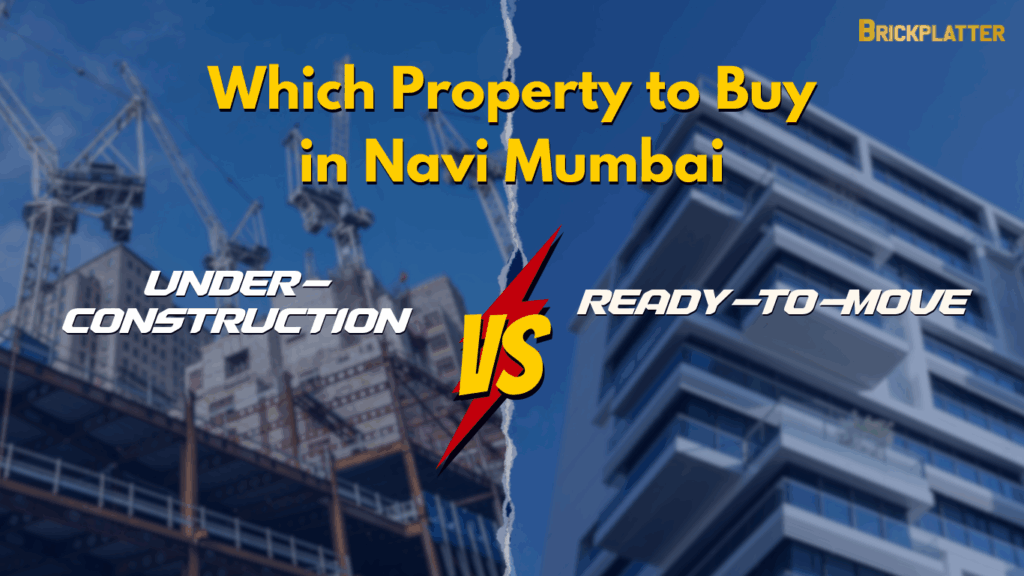
Investing in Under-Construction vs Ready-to-Move Properties in Navi Mumbai

Navi Mumbai, often dubbed Mumbai’s planned twin city, has rapidly evolved into a real estate hotspot. With infrastructure like the upcoming Navi Mumbai International Airport, metro lines, IT parks, and SEZs, the region has become a magnet for both end-users and real estate investors. But if you’re looking to invest here, one big question stands out: Should you go for an under-construction property or a ready-to-move-in unit? Both options offer unique advantages and risks—especially in an emerging hub like Navi Mumbai. At BrickPlatter, we help investors understand the nuances of both choices, particularly when it comes to fractional ownership opportunities in pre-leased or upcoming high-yield assets. Let’s break it down. Ready-to-Move-In Properties: Immediate Returns, Lower Risk Advantages: No Waiting Period: As the name suggests, these properties are ready for possession. You can either move in or start renting it out from day one. Assured Quality & Layout: You see what you get. No surprises in terms of construction quality or space utilization. Immediate Rental Income: If your goal is passive income, this is ideal. Many BrickPlatter investors prefer pre-leased ready properties that offer rental returns from day one. Lower Risk of Delay: You’re not dependent on developer timelines, which are often unpredictable in under-construction projects. GST Exemption: Ready-to-move properties do not attract GST, which helps reduce acquisition costs. Ideal For: Investors seeking immediate rental returns NRIs looking for operational ease Risk-averse individuals Buyers wanting to avoid construction-related uncertainties Under-Construction Properties: Higher Growth, Higher Risk Advantages: Lower Prices: You often get these properties at a lower rate compared to ready units in the same locality. Customisation Options: Developers may allow certain customisation in flooring, tiling, or interiors during early construction stages. Higher Appreciation Potential: If chosen wisely, these properties can appreciate significantly by the time they’re ready—especially in high-growth nodes like Ulwe, Dronagiri, and Taloja in Navi Mumbai. Flexible Payment Plans: Developers often offer staggered payments and early-bird discounts. Risks to Consider: Project Delays: One of the biggest risks. Even reputed builders face delays due to approvals or funding issues. Execution Risk: There’s always a risk that the final product may not meet the promised specifications. GST Applicable: Under-construction properties attract 5% GST, which increases your initial investment. Ideal For: Long-term investors seeking capital appreciation Buyers with flexibility on possession timelines Investors using SPV-based fractional models with an appetite for growth-linked returns Navi Mumbai Market Trends to Consider Navi Mumbai’s growth is not just speculative—it’s infrastructural. With major developments such as: Navi Mumbai International Airport Mumbai Trans Harbour Link (MTHL) Metro Line 1 and 2 IT & commercial corridors in Ghansoli, Airoli, and Belapur Luxury holiday homes near Panvel and Alibaug …the region is seeing an upward trend in both residential and commercial demand. In this environment, ready-to-move commercial properties in prime micro-markets offer steady rental income, while under-construction homes or hotels in emerging nodes promise capital appreciation once infrastructure goes live. What BrickPlatter Recommends for Smart Investors At BrickPlatter, we focus on pre-leased, premium properties and under-construction assets with verified ROI potential—offered via our fractional ownership model through SPVs. This allows investors to: Diversify between rental income (ready properties) and future gains (under-construction) Start investing with just ₹10 lakhs Avoid legal and operational hassles Choose from properties in Navi Mumbai, Pune, Goa, and other high-potential cities Whether you’re a risk-conscious NRI, a young urban investor, or an HNIs diversifying portfolio, we recommend: Ready-to-move properties for rental-focused passive income Under-construction projects for long-term growth and wealth creation Fractional Ownership Advantage in Both Cases Whether it’s an under-construction commercial plaza in Panvel or a fully operational office space in Vashi, fractional real estate investing via BrickPlatter ensures: Shared ownership with full legal protection via SPVs Regular income (for ready properties) Capital growth potential (for under-construction units) Exit options after lock-in periods Zero maintenance and management burden You don’t need crores anymore. A smart ₹10 lakh investment with the right strategy and partner can unlock both income and appreciation. Looking to Invest in Navi Mumbai? Let’s Talk. Whether you’re curious about fractional real estate ownership, want to explore pre-leased investment opportunities, or need help navigating the under-construction market, BrickPlatter is here to guide you. Related Posts All Posts Top Benefits of Fractional Ownership for First-Time Investors May 16, 2025/Read More Pre-Leased vs Under-Construction Properties – A Comparative Guide May 16, 2025/Read More

Investing in Under-Construction vs Ready-to-Move Properties in Navi Mumbai Read More »

How BrickPlatter Curates Prime Pre-Leased Properties for You

Investing in real estate has long been seen as a secure path to wealth creation – but finding the right property can be daunting. Between assessing location, tenant reliability, legal paperwork, and rental yield, even experienced investors struggle to find income-generating assets. That’s why at BrickPlatter, we make it our mission to offer you only the most carefully vetted, pre-leased properties – assets that are designed to deliver consistent rental income and strong capital appreciation. That’s where BrickPlatter comes in. As India’s next-gen fractional real estate platform, we specialize in identifying and offering only pre-leased, investment-grade properties that deliver stable returns and long-term value. At BrickPlatter, property curation isn’t guesswork—it’s a data-backed, expert-driven process. We combine market intelligence, legal due diligence, and financial vetting to select properties that are not only premium but also offer monthly rental income from day one. Whether you’re an NRI, a first-time investor, or an HNI looking to diversify, our platform ensures you get access to carefully chosen commercial and residential real estate—minus the hassle of managing it yourself. But what exactly goes on behind the scenes before a property is listed on the BrickPlatter platform? Let’s break it down. Identifying High-Demand Locations Location is the foundation of any successful real estate investment. Our team conducts in-depth market research to shortlist Tier-1 and emerging Tier-2 cities that offer: High tenant demand Business and infrastructure growth Low vacancy risk Cities like Mumbai, Navi Mumbai, Pune, Bengaluru, Hyderabad, and Delhi NCR often top our list due to their robust commercial activity and real estate performance. We also explore strategic holiday destinations like Goa, Lonavala, and Udaipur for diversified offerings in holiday homes and resorts. Selecting Grade-A Properties with Strong Lease Agreements Once a location is finalized, we evaluate commercial and residential buildings that meet strict quality and compliance parameters. Our curation team ensures that each property: Is Grade-A or investment-grade Has 100% occupancy or reliable tenant pipeline Is pre-leased to reputed tenants (corporates, banks, MNCs, retail chains) Has lease terms of 3+ years with escalation clauses We avoid properties with unstable tenancy or legal uncertainties. This ensures you invest in income-generating properties from Day 1. Explore listings: https://brickplatter.com/fractional-ownership-properties/ Due Diligence: Legal, Technical, and Financial Before listing any property, we put it through a multi-layered due diligence process: Title Check – To ensure there are no ownership disputes or encumbrances. Compliance Check – To verify adherence to RERA, fire NOCs, occupancy certificates, etc. Lease Agreement Review – To assess rent terms, lock-in periods, and escalation clauses. Valuation & Rental Yield Study – We compare current rent with market benchmarks to ensure healthy yields (typically 7–10% per annum). This thorough background check protects your investment and helps you build a risk-mitigated portfolio. Structuring via SPVs for Seamless Ownership Every selected property is placed under a Special Purpose Vehicle (SPV)—a legal entity that allows multiple investors to co-own the property in a structured and transparent manner. With SPV-based ownership: Each investor receives shares proportionate to their investment You enjoy passive income via rental distribution There is a clear exit framework in place (sale or share transfer) This model enhances security and ensures compliance with Indian real estate investment norms. Want to learn how it works? https://brickplatter.com/how-it-works/ Real-Time Platform Listings with Performance Insights Once curated and verified, the property is listed on BrickPlatter’s property dashboard with: Investment summary Property images and videos Rental yield, lease terms, and IRR forecast Tenant profile and property age Exit strategy options Investors can evaluate and book their fractional share online—100% transparent, digital, and secure. Read more insights on our blog: https://brickplatter.com/blogs/ Property Management Post-Investment Curation doesn’t stop after the sale. BrickPlatter continues to manage your property with: Monthly rent collection & disbursement Tenant relationship management Periodic maintenance & legal compliance Annual performance reports This allows you to focus on wealth creation without the burden of property management. “At BrickPlatter, we believe real estate should not be limited to the ultra-wealthy. By carefully curating pre-leased properties and offering fractional access through SPVs, we’re making institutional-grade assets available to everyday investors. Our aim is to help individuals, NRIs, and HNIs build smart portfolios with reliable passive income and asset growth potential.” — Kamlesh Dubey, Co-Founder, BrickPlatter Start Investing in Curated Pre-Leased Assets Today Ready to make your money work smarter? With BrickPlatter, you can invest in curated, income-generating properties with complete transparency and ease. Whether your goal is to earn passive monthly income, diversify your portfolio, or co-own high-demand assets with just ₹10 lakhs, our team has done the heavy lifting for you. Start your fractional investment journey today and take the first step toward building wealth through real estate – without the full ownership burden. Related Posts All Posts Top Benefits of Fractional Ownership for First-Time Investors May 16, 2025/Read More Pre-Leased vs Under-Construction Properties – A Comparative Guide May 16, 2025/Read More

How BrickPlatter Curates Prime Pre-Leased Properties for You Read More »

Adani Realty Unveils ₹10,000 Crore Mega Township Near Navi Mumbai Airport

Adani Realty is set to embark on its most ambitious real estate venture to date—a sprawling township adjacent to the upcoming Navi Mumbai International Airport. Spanning over 1,000 acres in Panvel, this project is poised to redefine urban living in the Mumbai Metropolitan Region (MMR). Drawing inspiration from its flagship Shantigram township in Ahmedabad, Adani’s Panvel development aims to be a next-generation urban hub. The project, currently referred to as “Adani Panvel,” is anticipated to be nearly twice the size of the group’s 600-acre Dharavi redevelopment initiative in Mumbai. With an estimated investment exceeding ₹10,000 crore, the township will be developed over a decade in phased construction. Strategically located near the Navi Mumbai International Airport, which is also being developed by the Adani Group, the township is expected to benefit from enhanced connectivity and infrastructure. The airport’s inauguration is slated for June 2025, and the township’s official launch is anticipated to follow. Preparatory work is already underway, including the construction of a new access road to connect the township directly to the nearby expressway. Adani Realty is also in the process of securing necessary regulatory approvals and finalizing the project’s launch strategy. This development aligns with Adani Realty’s broader expansion plans in the MMR, following the launch of 9 PBR, a premium residential project in Nerul, Navi Mumbai. The company’s portfolio has surpassed 200 million square feet, with 130 million square feet earmarked for future development. The Panvel township is expected to catalyze real estate growth in the region, offering a blend of residential, commercial, and recreational spaces. Its proximity to major infrastructure projects like the Mumbai Trans Harbour Link further enhances its appeal to investors and homebuyers alike. For more updates on real estate developments, visit the BrickPlatter News section. Source:https://www.business-standard.com/industry/news/adani-panvel-township-navi-mumbai-airport-real-estate-launch-125042200353_1.html Related Posts All Posts L&T Realty Strategically acquires Land in Panvel signals New Growth Trajectory May 19, 2025/Read More Godrej Properties Bags 717 Crores worth 6.54 Acres land parcel from CIDCO inKharghar Navi Mumbai May 19, 2025/Read More

Adani Realty Unveils ₹10,000 Crore Mega Township Near Navi Mumbai Airport Read More »

Build Capital Commits ₹400 Crore to MMR emphasizing ₹150 crores for Navi Mumbai in 2025

In a strategic move to bolster early-stage real estate financing, Build Capital has announced plans to invest over ₹400 crore in the Mumbai Metropolitan Region (MMR) throughout 2025. Of this, ₹150 crore is earmarked specifically for projects in Navi Mumbai, reflecting the firm’s focus on high-growth micro-markets. The investment strategy includes executing 15–20 transactions across MMR, targeting residential, commercial, and mixed-use developments. This initiative follows Build Capital’s initial investment of ₹30 crore in a project by Satyam Group in Panvel, marking its entry into Navi Mumbai’s burgeoning real estate sector. “We aim to address the existing gaps in early-stage financing within the real estate industry,” said Kuldeep Jain, CEO and Co-Founder of Build Capital. “Our focus on MMR, particularly Navi Mumbai, aligns with the region’s rapid development and infrastructure growth.” Co-founder Rahul Nahata added that the firm plans to double its team size in the coming year to expedite capital deployment and project assessments. “Our in-house expertise enables us to evaluate and fund projects swiftly, sometimes within 15–20 days,” he noted. Since its inception in April 2024, Build Capital has facilitated transactions totaling ₹100 crore, including investments in SRA projects, society redevelopment, and CIDCO plot developments. The firm’s targeted investment in Navi Mumbai is timely, considering the area’s infrastructural advancements like the upcoming Navi Mumbai International Airport and the Mumbai Trans Harbour Link. These developments are poised to enhance connectivity and stimulate economic growth, making Navi Mumbai an attractive destination for real estate investment. Build Capital’s commitment underscores its role as a key player in bridging financing gaps and supporting the region’s evolving real estate landscape. For more updates on real estate investments and developments, visit the BrickPlatter News section. Source: https://realty.economictimes.indiatimes.com/news/industry/build-capital-plans-to-invest-rs-400-crore-in-mumbai-region-in-2025/117516694 Related Posts All Posts L&T Realty Strategically acquires Land in Panvel signals New Growth Trajectory May 19, 2025/Read More Godrej Properties Bags 717 Crores worth 6.54 Acres land parcel from CIDCO inKharghar Navi Mumbai May 19, 2025/Read More

Build Capital Commits ₹400 Crore to MMR emphasizing ₹150 crores for Navi Mumbai in 2025 Read More »

Godrej Properties Bags 717 Crores worth 6.54 Acres land parcel from CIDCO inKharghar Navi Mumbai

In a significant move, Godrej Properties Ltd (GPL) has acquired a 6.54-acre land parcel from the City and Industrial Development Corporation (CIDCO) in Kharghar, Navi Mumbai, for approximately ₹716.58 crore. The acquisition comprises three contiguous plots totaling 26,478 square meters, secured on a 60-year leasehold basis. The transaction incurred a stamp duty of ₹35.82 crore, with each registration requiring a fee of ₹30,000, as per documents reviewed by Square Yards. The land is designated for mixed-use development, encompassing both residential and commercial projects. This strategic acquisition aligns with Godrej Properties’ expansion plans in the Mumbai Metropolitan Region (MMR), following their recent procurement of a 10-acre land parcel in Yelahanka, Bengaluru. Kharghar’s prominence as a real estate hub is bolstered by infrastructural developments such as the upcoming Navi Mumbai International Airport and enhanced connectivity through the Mumbai Trans Harbour Link. These advancements are expected to amplify the region’s appeal to investors and developers from across the country. For more updates on real estate developments, visit the BrickPlatter News section. Related Posts All Posts Adani Realty Unveils ₹10,000 Crore Mega Township Near Navi Mumbai Airport May 19, 2025/Read More Build Capital Commits ₹400 Crore to MMR emphasizing ₹150 crores for Navi Mumbai in 2025 May 19, 2025/Read More

Godrej Properties Bags 717 Crores worth 6.54 Acres land parcel from CIDCO inKharghar Navi Mumbai Read More »

Index
Fractional real estate is filling fast 
Enquire Now….. before it’s gone!