Uncategorized

Avante Spaces Secures ₹1150 Crore Loan from ICICI Bank for Pune Project

Avante Spaces Secures ₹1150 Crore Loan from ICICI Bank for Pune Project

Fractional Real Estate in India: A Smarter Way to Own Premium Property Avante Spaces, the real estate development arm of Kirloskar Industries, has secured a significant ₹1,150 crore term loan from ICICI Bank to finance a large-scale Grade A commercial real estate project in Pune’s Kothrud area. The structured financing deal, spread over a 44-month tenure, marks a major milestone in the company’s ongoing expansion within India’s rapidly growing commercial property sector. The funding is expected to support the development of a premium office space project designed to meet rising demand for high-quality, sustainable, and well-connected commercial infrastructure in key urban micro-markets. The project is strategically located in Kothrud, one of Pune’s most established residential and business districts, known for its strong connectivity, educational institutions, and proximity to major IT and industrial hubs. Strategic Financing for Premium Commercial Development The ₹1,150 crore term loan reflects growing institutional confidence in Grade A commercial real estate projects in India’s top-tier cities. The structured nature of the financing, with a 44-month repayment schedule, is designed to align with the project’s development lifecycle, ensuring smooth execution from construction to completion and leasing. According to industry experts, such large-scale funding arrangements indicate strong lender appetite for professionally managed real estate developments, particularly those backed by established corporate groups like Kirloskar Industries. The participation of ICICI Bank further highlights the banking sector’s continued support for infrastructure-driven growth in urban India. The funds will be primarily used for land development, construction activities, regulatory approvals, and associated infrastructure required to build a modern commercial complex. The project is expected to feature state-of-the-art office spaces tailored for multinational corporations, IT firms, financial institutions, and startups seeking premium work environments. Avante Spaces Expands Its Commercial Real Estate Footprint Avante Spaces, the real estate arm of Kirloskar Industries, has been steadily building its portfolio in the commercial real estate space, focusing on Grade A developments in high-demand urban centers. The company’s strategy revolves around creating modern office ecosystems that integrate efficiency, sustainability, and long-term value creation. With increasing demand for organized office spaces in India’s metropolitan regions, developers like Avante Spaces are positioning themselves to capitalize on the shift from fragmented commercial properties to large, integrated business hubs. The Pune project represents a key addition to this strategy and is expected to strengthen the company’s presence in Western India’s commercial real estate market. The Kothrud location offers a significant advantage due to its established infrastructure, access to skilled talent, and proximity to major IT corridors such as Hinjewadi and Baner. These factors make it an attractive destination for companies looking to expand operations outside Mumbai while maintaining connectivity to major business ecosystems. Pune’s Growing Importance as a Commercial Hub Pune has emerged as one of India’s fastest-growing commercial real estate markets, driven by the expansion of the IT sector, manufacturing industries, and startup ecosystem. Areas like Kothrud, Hinjewadi, and Baner have seen consistent demand for office spaces, supported by improved infrastructure and urban development initiatives. The city’s transformation into a major business hub has attracted significant investment from both domestic and international developers. As companies continue to adopt hybrid and flexible work models, the demand for high-quality Grade A office spaces has further increased, making projects like the one backed by Avante Spaces highly relevant in the current market environment. Real estate analysts suggest that Pune’s commercial office market is expected to witness steady absorption rates over the coming years, supported by expansion in IT services, engineering firms, and global capability centers (GCCs). The addition of new Grade A developments is expected to further strengthen the city’s positioning as a preferred alternative to traditional metros like Mumbai and Bengaluru. Strengthening Lender Confidence in Real Estate Sector The involvement of ICICI Bank in this transaction underscores continued confidence among financial institutions in India’s commercial real estate growth story. Banks are increasingly supporting well-structured, high-quality projects that demonstrate strong demand potential and credible developer backing. In recent years, lenders have become more selective, focusing on projects with clear execution strategies, strong sponsor profiles, and location advantages. The Kirloskar-backed Avante Spaces project aligns with these criteria, making it a suitable candidate for large-scale financing. This deal also reflects a broader trend in the banking sector, where funding is increasingly directed toward urban infrastructure, commercial developments, and mixed-use projects that contribute to economic growth and employment generation. Outlook for the Project and Market Impact The Pune commercial development backed by Avante Spaces is expected to play a significant role in shaping the city’s evolving office space landscape. Once completed, the project will likely attract a mix of multinational companies, IT firms, and emerging startups seeking premium-grade office environments. The structured funding arrangement provides financial stability for timely execution, which is critical in maintaining project momentum and meeting market demand. With Pune’s commercial real estate sector continuing to expand, the project is expected to contribute to both supply growth and increased investment activity in the region. Overall, the ₹1,150 crore financing deal between Avante Spaces and ICICI Bank marks a strong vote of confidence in Pune’s commercial real estate potential and reinforces Kirloskar Industries’s growing presence in India’s property development sector. Related Posts All Posts Blogs Commercial L&T Realty Strategically acquires Land in Panvel signals New Growth Trajectory May 19, 2025/Read More Godrej Properties Bags 717 Crores worth 6.54 Acres land parcel from CIDCO inKharghar Navi Mumbai May 19, 2025/Read More

Avante Spaces Secures ₹1150 Crore Loan from ICICI Bank for Pune Project Read More »

Fractional Real Estate in India: A Smarter Way to Own Premium Property

Fractional Real Estate in India: A Smarter Way to Own Premium Property

Fractional Real Estate in India: A Smarter Way to Own Premium Property Ever imagined owning a slice of premium real estate in Mumbai’s Bandra or Bangalore’s Koramangala? What once seemed out of reach is now becoming a reality through fractional ownership. This innovative investment model is opening the doors to high-value properties without requiring crores upfront. For decades, real estate has been one of India’s most trusted wealth-building assets. But rising prices—like the average ₹2.8 crore cost of a 1,000 sq ft apartment in Mumbai—have made entry difficult for many investors. Fractional investing is changing that narrative by offering affordability, flexibility, and accessibility. Breaking Barriers with Lower Investment One of the biggest advantages of fractional ownership is its affordability. Instead of needing crores, investors can enter the market with as little as ₹25 lakhs. This significantly lowers the entry barrier and allows more people to participate in premium real estate opportunities that were once reserved for ultra-high-net-worth individuals. Smarter Diversification Across Cities Fractional investing allows investors to diversify their portfolio across multiple cities like Mumbai, Delhi, and Bangalore. Rather than putting all capital into a single property, investors can spread risk and tap into different markets—maximizing potential returns while maintaining balance. Hassle-Free Ownership with Professional Management Owning property traditionally comes with its fair share of challenges—from maintenance issues to tenant management. Fractional ownership platforms handle these responsibilities through professional management services. This means investors can enjoy passive income without dealing with day-to-day property concerns. Liquidity: A Game-Changer in Real Estate Unlike traditional real estate, which often takes months or even years to sell, fractional ownership offers improved liquidity. Easier Exit Options: Many platforms provide secondary marketplaces where investors can sell their shares more easily. Shorter Investment Horizons: Instead of long lock-in periods, investors can expect holding durations of around 3–5 years. Regular Income Streams: Rental yields from commercial properties often provide steady monthly or quarterly income. Market Growth and Rising Demand The growth of fractional real estate in India is backed by strong numbers. Industry reports suggest that the sector is expected to grow at a CAGR of 23% between 2021 and 2026. Additionally, investor interest has surged by nearly 40% post-pandemic, reflecting increased awareness and confidence in this model. Regulatory developments are also adding credibility. The Securities and Exchange Board of India (SEBI) is working on guidelines for fractional ownership platforms, which is expected to bring more transparency and investor protection. Unlocking Commercial Real Estate Opportunities Fractional ownership is not limited to residential properties. It is also transforming access to Grade A commercial spaces in metro cities. These properties typically offer annual rental yields between 7% and 9%, making them attractive for investors seeking stable and consistent returns. The Future of Real Estate Investment As India’s real estate sector evolves, fractional ownership is emerging as a powerful alternative to traditional investing. It combines affordability, diversification, and liquidity—three key factors modern investors look for. This isn’t just about owning a property anymore. It’s about participating in a smarter, more flexible investment ecosystem. Fractional real estate is redefining ownership and making premium assets accessible to a wider audience. Conclusion Fractional ownership is revolutionizing how Indians invest in real estate. By lowering costs, reducing risk, and offering better liquidity, it provides a compelling opportunity for both new and experienced investors. If you’re looking to invest smartly and access high-value properties without stretching your finances, fractional real estate might just be the future you’ve been waiting for. Related Posts All Posts Blogs Commercial L&T Realty Strategically acquires Land in Panvel signals New Growth Trajectory May 19, 2025/Read More Godrej Properties Bags 717 Crores worth 6.54 Acres land parcel from CIDCO inKharghar Navi Mumbai May 19, 2025/Read More

Fractional Real Estate in India: A Smarter Way to Own Premium Property Read More »

Global Fractional Vacation Homes Market Set for Strong Growth Through 2032

Global Fractional Vacation Homes Market Set for Strong Growth Through 2032

Global Fractional Vacation Homes Market Set for Strong Growth Through 2032 The global fractional vacation homes market is witnessing significant momentum as demand for shared luxury property ownership continues to rise worldwide. According to a recent study released by HTF Market Intelligence, the industry is projected to grow at a steady pace over the coming years, driven by evolving consumer preferences, rising disposable incomes, and the increasing appeal of flexible real estate investments. Market Overview and Growth Forecast The newly published report offers an in-depth analysis spanning over 143 pages, covering market trends, product scope, regional segmentation, and future projections from 2025 to 2032. The study estimates that the global fractional vacation homes market will grow from USD 12.6 billion in 2025 to approximately USD 29.8 billion by 2032, registering a compound annual growth rate (CAGR) of 11.30%. This growth reflects a shift in how individuals approach luxury real estate ownership. Instead of purchasing entire properties, buyers are increasingly opting for fractional ownership models that allow them to share costs while still enjoying premium vacation experiences. What is Driving Market Expansion? Several key factors are fueling the rapid expansion of the fractional vacation homes market: 1. Rising Demand for Luxury ExperiencesModern consumers are prioritizing experiences over full ownership. Fractional vacation homes provide access to high-end properties without the financial burden of full ownership, making luxury travel more accessible. 2. Cost Efficiency and Shared OwnershipFractional ownership significantly reduces upfront investment, maintenance costs, and management hassles. This model appeals to both seasoned investors and first-time buyers looking for second homes. 3. Growth of Remote Work CultureThe global shift toward remote and hybrid work models has enabled individuals to spend extended periods in vacation destinations. This trend has boosted demand for flexible and shared property ownership options. 4. Technological Advancements in Property ManagementDigital platforms and property management solutions are making it easier to manage bookings, ownership shares, and maintenance, enhancing the overall customer experience. Key Market Players The report highlights several major players shaping the competitive landscape of the fractional vacation homes market. These companies are leveraging innovative business models and premium property portfolios to attract global customers: Pacaso Inspirato Equity Estates ThirdHome Marriott Vacation Club Accor OneLiving Belmond Residences Sotheby’s International Realty Other notable participants include Ember, August Collection, Lifestyle Asset Group, Portico Club, Banyan Tree Residences, Ritz-Carlton Destination Club, and Four Seasons Private Residences. These players are actively expanding their portfolios across key global destinations. Regional Insights The study segments the market by major regions, including North America, Europe, Asia-Pacific, Latin America, and the Middle East & Africa. Among these, North America currently leads the market due to high consumer awareness, strong real estate infrastructure, and the presence of leading fractional ownership companies. However, Asia-Pacific is expected to witness the fastest growth during the forecast period. Rising wealth among high-net-worth individuals, growing tourism, and increased investment in luxury real estate are key factors contributing to regional expansion. Europe also remains a significant market, driven by demand for vacation homes in popular destinations such as coastal regions and heritage cities. Emerging Trends in Fractional Ownership The fractional vacation homes market is evolving rapidly, with several emerging trends shaping its future: Digitalization of Ownership PlatformsCompanies are investing in user-friendly digital platforms that streamline booking, ownership tracking, and property management. Expansion into New DestinationsMarket players are targeting emerging travel destinations to attract a broader customer base and diversify offerings. Sustainability and Eco-Friendly DevelopmentsThere is growing emphasis on environmentally sustainable properties, as buyers increasingly consider eco-conscious investments. Integration with Hospitality ServicesMany fractional ownership models now include hotel-like services such as concierge, housekeeping, and on-demand experiences, enhancing the overall value proposition. Challenges and Market Constraints Despite its strong growth outlook, the market faces certain challenges: Regulatory Complexities: Different countries have varying laws related to property ownership and fractional investments. Market Awareness: While growing, awareness about fractional ownership is still limited in some regions. Liquidity Concerns: Selling fractional shares can be more complex compared to traditional real estate transactions. Addressing these challenges will be crucial for sustained market growth and investor confidence. Future Outlook Looking ahead, the fractional vacation homes market is poised for robust expansion as more consumers seek flexible, cost-effective ways to enjoy luxury real estate. The combination of technological innovation, evolving travel preferences, and increasing global wealth is expected to drive continued growth through 2032. With major companies expanding their presence and new entrants entering the space, competition is likely to intensify, leading to better services and more diverse offerings for buyers. Conclusion The global fractional vacation homes market is entering a high-growth phase, supported by changing consumer behavior and innovative ownership models. As highlighted by HTF Market Intelligence, the sector’s strong projected CAGR of 11.30% underscores its long-term potential. For investors, developers, and travelers alike, fractional ownership represents a compelling opportunity to access premium real estate while optimizing costs and flexibility. As the market continues to mature, it is expected to redefine the future of vacation home ownership worldwide. Related Posts All Posts Blogs Commercial L&T Realty Strategically acquires Land in Panvel signals New Growth Trajectory May 19, 2025/Read More Godrej Properties Bags 717 Crores worth 6.54 Acres land parcel from CIDCO inKharghar Navi Mumbai May 19, 2025/Read More

Global Fractional Vacation Homes Market Set for Strong Growth Through 2032 Read More »

UP-RERA Slaps ₹5 Lakh Fine on Three Projects for Unregistered Sales​

UP-RERA Slaps ₹5 Lakh Fine on Three Projects for Unregistered Sales​

UP-RERA Slaps ₹5 Lakh Fine on Three Projects for Unregistered Sales Crackdown on Unregistered Real Estate Projects In a strong move to enforce regulatory compliance, the Uttar Pradesh Real Estate Regulatory Authority has imposed a penalty of ₹5 lakh each on three real estate projects for promoting and selling units without mandatory registration. The action highlights the authority’s continued efforts to curb illegal real estate practices and safeguard homebuyer interests. Projects Found in Violation The penalized projects include Estate 105 in Noida, Sobha Rivana in Noida, and Avikalp Estate in Lucknow. According to UP-RERA, these projects were either advertised online or involved in sales activities without obtaining the required registration under the law. Authorities found that these developments were being promoted through digital platforms, while one of them had already begun selling units—both actions considered violations of regulatory norms. Violation of RERA Act Provisions The projects were found to be in breach of provisions under the Real Estate (Regulation and Development) Act, 2016, which mandates that all eligible real estate projects must be registered before any form of marketing, advertisement, booking, or sale. Under the Act, any project exceeding 500 square meters or comprising more than eight apartments must be registered with the respective state authority before being offered to buyers. Non-compliance is treated as a punishable offense. Notices Issued, Responses Rejected UP-RERA had issued notices to the promoters of the three projects, seeking explanations for their actions. However, the responses submitted by the developers were deemed unsatisfactory by the authority, leading to the imposition of penalties under Section 59 of the Act. This section allows authorities to impose financial penalties and take stricter action in case of continued non-compliance. Growing Enforcement by UP-RERA This action is part of a broader crackdown by the Uttar Pradesh Real Estate Regulatory Authority against non-compliant developers. In recent months, the authority has intensified monitoring of project registrations, advertisements, and sales practices to ensure transparency in the real estate sector. Such measures reflect a stricter regulatory environment aimed at improving accountability across the industry. Protection of Homebuyer Interests The primary objective behind such enforcement actions is to protect homebuyers from fraudulent or unauthorized real estate transactions. The Real Estate (Regulation and Development) Act, 2016 was introduced to bring transparency, accountability, and efficiency to the sector while ensuring fair practices and timely project delivery. By penalizing unregistered projects, UP-RERA aims to prevent buyers from investing in developments that lack legal approval or proper oversight. Strict Warning to Developers UP-RERA has reiterated that promoting or selling unregistered projects will not be tolerated. The authority has warned developers to strictly adhere to regulatory requirements or face severe penalties, which can include substantial fines and stricter legal action in case of repeated violations. This decisive step sends a strong message to the real estate industry regarding compliance and accountability. Conclusion The ₹5 lakh penalty imposed on three projects underscores the commitment of the Uttar Pradesh Real Estate Regulatory Authority to enforcing real estate regulations and maintaining transparency in the sector. As regulatory oversight increases, developers are expected to follow proper procedures, while homebuyers are advised to verify project registration details before making investment decisions. Related Posts All Posts Blogs Commercial L&T Realty Strategically acquires Land in Panvel signals New Growth Trajectory May 19, 2025/Read More Godrej Properties Bags 717 Crores worth 6.54 Acres land parcel from CIDCO inKharghar Navi Mumbai May 19, 2025/Read More

UP-RERA Slaps ₹5 Lakh Fine on Three Projects for Unregistered Sales​ Read More »

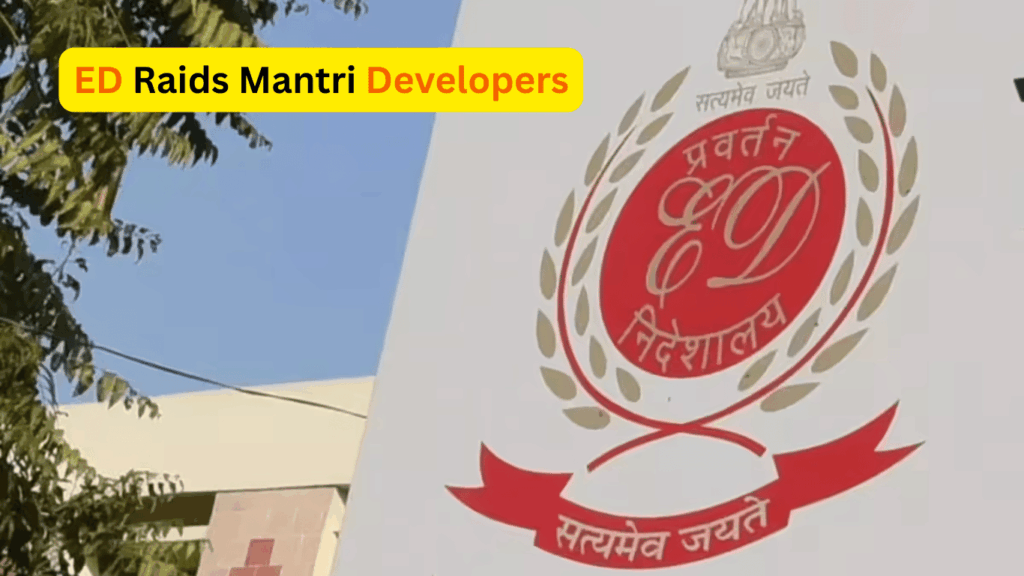
ED Conducts Major Raids on Mantri Developers in Money Laundering Probe

ED Conducts Major Raids on Mantri Developers in Money Laundering Probe

ED Conducts Major Raids on Mantri Developers in Money Laundering Probe In a significant development in India’s real estate and regulatory landscape, the Enforcement Directorate (ED) has carried out extensive raids on Mantri Developers as part of an ongoing money laundering investigation. The action highlights increased scrutiny of financial practices within the real estate sector and underscores the government’s commitment to tackling economic offences. ED’s Action Against Mantri Developers The Enforcement Directorate (ED) conducted coordinated search operations across multiple locations linked to Mantri Developers, a well-known real estate firm. These raids were part of a probe under the Prevention of Money Laundering Act (PMLA), which is used to investigate financial irregularities and illicit fund flows. Officials reportedly examined financial records, transaction details, and documents related to ongoing and past real estate projects. The objective of the operation was to trace suspected irregularities and identify possible links to money laundering activities. Background of the Case The investigation into Mantri Developers is believed to stem from earlier complaints and findings by regulatory authorities. These may involve alleged financial mismanagement, diversion of funds, or discrepancies in project financing. The ED typically initiates such probes based on First Information Reports (FIRs) or charges filed by other investigative agencies. In this case, the action suggests that authorities have identified sufficient grounds to examine financial transactions associated with the developer. Scope of the Raids The raids reportedly covered offices, residential premises, and other properties connected to the company and its key personnel. During such operations, the ED usually seizes documents, digital devices, and financial records that can help establish money trails. Sources indicate that investigators are focusing on: Fund flow between group entities Transactions with third-party vendors Investments in real estate projects Possible diversion of customer funds The scale of the operation points to a comprehensive effort to uncover the extent of alleged financial irregularities. Impact on the Real Estate Sector The ED’s action against Mantri Developers has drawn attention from across the real estate industry. Such high-profile investigations often have broader implications, including: Increased regulatory scrutiny on developers Greater emphasis on financial transparency Strengthening compliance requirements Impact on investor confidence The case serves as a reminder for real estate companies to maintain robust financial practices and adhere strictly to regulatory norms. Government’s Crackdown on Financial Irregularities The raids are part of a broader crackdown by Indian authorities on economic offences, particularly in sectors like real estate, infrastructure, and finance. The government has been actively pursuing cases involving money laundering, fraud, and misuse of public or investor funds. The Enforcement Directorate plays a key role in this effort by investigating complex financial crimes and ensuring accountability. Its actions are aimed at maintaining the integrity of the financial system and protecting stakeholders. What is the Prevention of Money Laundering Act (PMLA)? The Prevention of Money Laundering Act (PMLA) is a key legislation in India used to combat money laundering and related offences. It empowers the ED to: Conduct searches and seizures Attach properties linked to illegal proceeds Arrest individuals involved in financial crimes Prosecute offenders in special courts The use of PMLA in this case indicates the seriousness of the allegations being investigated. Possible Legal Consequences If the investigation finds evidence of wrongdoing, Mantri Developers and associated individuals could face serious legal consequences. These may include: Attachment of assets Financial penalties Criminal prosecution Restrictions on business operations However, it is important to note that investigations are ongoing, and conclusions will depend on the findings of the ED. Industry Reactions and Concerns The real estate sector has responded with caution to the developments. Industry experts believe that while such actions may create short-term uncertainty, they ultimately contribute to a more transparent and accountable business environment. Buyers and investors are also closely monitoring the situation, especially those associated with projects developed by the company. Ensuring timely communication and clarity will be crucial in maintaining trust. Importance of Transparency in Real Estate The case underscores the importance of transparency, accountability, and regulatory compliance in the real estate sector. Developers are increasingly expected to: Maintain clear financial records Ensure proper utilization of funds Adhere to legal and regulatory frameworks Build trust with customers and investors Strengthening these practices can help prevent similar issues and promote sustainable growth in the industry. Conclusion The ED’s raids on Mantri Developers mark a significant step in India’s ongoing efforts to combat financial irregularities in the real estate sector. As the investigation unfolds, it is expected to shed light on the nature and extent of the alleged money laundering activities. While the outcome remains to be seen, the case highlights the growing importance of compliance and transparency in business operations. It also reinforces the role of regulatory authorities in maintaining financial discipline and protecting the interests of stakeholders. The developments will continue to be closely watched by industry players, investors, and policymakers, as they may set important precedents for future regulatory actions in the real estate sector. Related Posts All Posts Blogs Commercial L&T Realty Strategically acquires Land in Panvel signals New Growth Trajectory May 19, 2025/Read More Godrej Properties Bags 717 Crores worth 6.54 Acres land parcel from CIDCO inKharghar Navi Mumbai May 19, 2025/Read More

ED Conducts Major Raids on Mantri Developers in Money Laundering Probe Read More »

Supreme Court of India Gives Final Chance to Noida Authority Over Stalled Noida Sports City Project

Supreme Court of India Gives Final Chance to Noida Authority Over Stalled Noida Sports City Project​

Supreme Court of India Gives Final Chance to Noida Authority Over Stalled Noida Sports City Project The Supreme Court of India has granted a final opportunity to the Noida Authority to comply with its earlier directions regarding the long-delayed Noida Sports City Project. The court’s decision comes amid growing concerns over the stalled development and the uncertainty faced by homebuyers and investors linked to the project. Supreme Court Seeks Compliance With Earlier Orders During a recent hearing, the Supreme Court of India expressed dissatisfaction with the slow progress and lack of compliance with its previous directives. The bench emphasized that the authorities must take immediate action to resolve the issues surrounding the halted Sports City developments. The court has now provided the Noida Authority with a final chance to present a clear plan and ensure that its earlier orders are implemented without further delay. The move is intended to accelerate the resolution of disputes and revive stalled construction activities. Background of the Noida Sports City Project The Noida Sports City Project was launched as an ambitious urban development initiative aimed at creating a world-class sports and residential hub in Noida. The project was expected to include international-standard sports facilities, residential complexes, commercial spaces, and modern infrastructure. However, the project has faced several challenges over the years, including regulatory issues, disputes over land use, and delays in construction. These complications eventually led to legal intervention and scrutiny by the Supreme Court of India. Concerns of Homebuyers and Investors Thousands of homebuyers who invested in residential units within the Noida Sports City Project have been waiting for years for the completion of their homes. The prolonged delays have raised serious concerns about financial losses and project uncertainty. The court acknowledged the hardships faced by buyers and stressed the need for authorities to act responsibly. By giving a final opportunity to the Noida Authority, the court hopes to ensure that the interests of buyers and stakeholders are protected. Court Emphasizes Accountability During the proceedings, the bench made it clear that failure to comply with its directions could lead to stricter action. The Supreme Court of India reiterated that government bodies and development authorities must follow legal procedures and honor commitments made to citizens. Legal experts believe that the court’s intervention could play a crucial role in breaking the long-standing deadlock and pushing the project toward completion. Future of the Sports City Development If the Noida Authority successfully complies with the court’s orders, the stalled Noida Sports City Project could finally see progress. Reviving the project would not only benefit homebuyers but also boost infrastructure development in Noida and surrounding regions. The project was originally envisioned as a major sports and lifestyle destination, and completing it could help strengthen urban development and economic growth in the area. Conclusion The decision by the Supreme Court of India to grant a final opportunity to the Noida Authority marks a crucial step toward resolving the prolonged issues surrounding the Noida Sports City Project. With thousands of homebuyers awaiting relief, the coming weeks will be critical in determining whether the authority can comply with the court’s directions and revive the long-stalled development. If implemented effectively, the court’s directive could pave the way for renewed construction activity and restore confidence among investors and residents in Noida. Related Posts All Posts Blogs Commercial L&T Realty Strategically acquires Land in Panvel signals New Growth Trajectory May 19, 2025/Read More Godrej Properties Bags 717 Crores worth 6.54 Acres land parcel from CIDCO inKharghar Navi Mumbai May 19, 2025/Read More

Supreme Court of India Gives Final Chance to Noida Authority Over Stalled Noida Sports City Project Read More »

Supreme Court Criticizes CBI Over Delay in Builders–Banks Nexus Probe​

Supreme Court Criticizes CBI Over Delay in Builders–Banks Nexus Probe​

Supreme Court Criticizes CBI Over Delay in Builders–Banks Nexus Probe The Supreme Court of India has strongly criticized the pace of investigation by the Central Bureau of Investigation (CBI) into the alleged nexus between builders and banks that has left thousands of homebuyers in financial distress. The court observed that delays in the probe have prolonged the suffering of buyers who invested their life savings in housing projects that remain incomplete or financially entangled due to alleged collusion between developers and financial institutions. During a recent hearing, the apex court expressed dissatisfaction with the progress of the investigation and stressed that justice for affected homebuyers cannot be indefinitely delayed. The court emphasized that authorities must take urgent steps to uncover the truth and ensure accountability for those responsible for the alleged fraud. Supreme Court Questions Slow Progress in Probe While reviewing the ongoing investigation, the bench of the Supreme Court of India questioned the slow pace of the probe being conducted by the Central Bureau of Investigation. The court noted that despite the serious nature of the allegations and the large number of victims involved, the investigation has not progressed quickly enough. The bench observed that thousands of homebuyers have been waiting for years for relief, while housing projects linked to the alleged scam remain stalled or embroiled in legal disputes. According to the court, investigative agencies must act with urgency because prolonged delays only worsen the financial and emotional hardship faced by families who invested their savings in these projects. The judges remarked that homebuyers cannot be forced to wait endlessly while investigations drag on without clear outcomes. Allegations of Collusion Between Builders and Banks The case revolves around allegations that certain real estate developers and bank officials worked together in a manner that ultimately harmed homebuyers. Under the alleged arrangement, banks sanctioned large loans to developers or allowed disbursements to housing projects without adequate safeguards. In many cases, homebuyers were asked to take housing loans under subvention schemes, where developers promised to pay the interest until the property was delivered. However, when construction stalled or developers failed to honor these commitments, buyers were left paying both loan installments and rent simultaneously. Investigations suggest that some financial institutions may have released loan amounts to developers even when construction progress did not justify such payments. As a result, buyers were left with incomplete homes while developers had already received significant funding. The court noted that such practices, if proven, represent a serious breach of trust and financial responsibility. Homebuyers Facing Years of Uncertainty Thousands of families across India have been affected by stalled housing projects linked to the alleged builder–bank nexus. Many of these buyers invested their life savings or took long-term housing loans expecting to move into their homes within a few years. Instead, they have faced years of uncertainty as projects remain incomplete and developers struggle with financial problems or legal cases. In some situations, buyers have continued paying loan installments despite not receiving possession of their homes. The Supreme Court of India acknowledged the emotional and financial strain this situation has caused. The court highlighted that homeownership is often the biggest financial decision for most families, and delays or fraud in the housing sector can have devastating consequences. Court Emphasizes Need for Accountability During the hearing, the bench stressed that authorities must determine whether there was deliberate wrongdoing or negligence by officials involved in approving and monitoring housing loans. If a nexus between builders and banks is proven, the individuals responsible must be held accountable under the law. The court also indicated that the investigation should focus on identifying how funds were disbursed, whether proper due diligence was followed, and whether any officials knowingly facilitated irregular financial transactions. The judges emphasized that transparency and accountability are essential to restore trust in the real estate and banking sectors. Wider Concerns in the Real Estate Sector The issue of stalled housing projects and disputes between developers, banks, and homebuyers has been a persistent concern in India’s real estate market. Over the past decade, several large housing projects across major cities have faced delays due to financial mismanagement, legal complications, or regulatory issues. The government has introduced reforms such as the Real Estate Regulatory Authority (RERA) to improve transparency and protect homebuyers. However, legacy cases involving older projects continue to surface in courts, highlighting the challenges buyers still face. Experts say stronger monitoring of project financing and stricter enforcement of regulatory guidelines could help prevent similar situations in the future. Relief Measures for Homebuyers Over the years, courts and regulatory bodies have attempted to provide relief to affected homebuyers through various mechanisms. These include directing developers to complete stalled projects, restructuring loans, or transferring projects to new developers capable of finishing construction. The Supreme Court of India has played a significant role in resolving major real estate disputes, often stepping in to ensure that buyers receive possession of their homes or appropriate compensation. However, the ongoing case highlights the complexity of addressing systemic issues involving multiple stakeholders such as developers, banks, regulators, and investigative agencies. Court Calls for Faster Investigation The apex court reiterated that the investigation must be conducted in a time-bound manner. The Central Bureau of Investigation has been instructed to expedite its probe and submit updates regarding the progress of the case. The judges made it clear that the suffering of homebuyers should not be prolonged due to procedural delays or inefficiencies in the investigation process. According to the court, the primary objective must be to uncover the truth and ensure justice for the victims. The court’s strong remarks underline the seriousness with which it views allegations of financial misconduct involving the housing sector. Hope for Thousands of Homebuyers For thousands of affected families, the intervention of the Supreme Court of India offers renewed hope that the long-running issue will finally move toward resolution. Buyers and housing rights groups have welcomed the court’s insistence on faster investigation and accountability. Legal experts believe the outcome of this

Supreme Court Criticizes CBI Over Delay in Builders–Banks Nexus Probe​ Read More »

Uttar Pradesh Approves Affordable Housing Policy

Uttar Pradesh Approves Affordable Housing Policy

Uttar Pradesh Approves Affordable Housing Policy The cabinet of Uttar Pradesh has approved a new affordable housing policy aimed at expanding housing opportunities for middle-income groups and economically weaker sections. The policy has been introduced under the central government’s housing initiative, Pradhan Mantri Awas Yojana-Urban 2.0, which focuses on ensuring “Housing for All” in urban areas. The decision was taken during a state cabinet meeting led by Yogi Adityanath, Chief Minister of Uttar Pradesh. The new policy is expected to encourage large-scale development of affordable homes across urban regions while offering financial incentives and support to both homebuyers and developers. Financial Support for Homebuyers Under the newly approved policy, eligible beneficiaries from economically weaker sections (EWS), low-income groups (LIG), and middle-income groups (MIG) will receive financial assistance to purchase or construct houses. The initiative under Pradhan Mantri Awas Yojana-Urban 2.0 will provide subsidies on home loans and direct financial support, making home ownership more accessible to urban residents. Officials said the scheme will help reduce the housing shortage in urban areas while improving living conditions for thousands of families. Incentives for Developers To accelerate the construction of affordable housing units, the policy also includes incentives for real estate developers. These incentives may include faster approvals, infrastructure support, and policy benefits that encourage developers to invest in affordable housing projects. The government believes that participation from private developers will play a key role in achieving the goals of Pradhan Mantri Awas Yojana-Urban 2.0 and meeting the rising demand for affordable homes. Boost to Urban Housing Development The approval of the new affordable housing policy is expected to boost the real estate sector in Uttar Pradesh. By encouraging collaboration between the government and private sector, the state aims to create a sustainable housing ecosystem that benefits both developers and residents. With urban populations growing rapidly, the policy will focus on developing modern housing projects equipped with essential infrastructure, including roads, water supply, sanitation, and community facilities. Strengthening Housing for All Mission The move reinforces the government’s commitment to the national housing mission launched under Narendra Modi’s administration. Through Pradhan Mantri Awas Yojana-Urban 2.0, the government aims to provide affordable and quality housing to millions of urban families across India. Officials believe the newly approved policy in Uttar Pradesh will play a crucial role in expanding the reach of the scheme and ensuring that more families have access to safe and affordable housing. Conclusion The approval of the affordable housing policy under Pradhan Mantri Awas Yojana-Urban 2.0 marks a significant step for Uttar Pradesh in addressing urban housing challenges. By offering financial assistance to homebuyers and encouraging developers to build affordable homes, the state government aims to accelerate the development of inclusive and sustainable urban communities. Related Posts All Posts Blogs Commercial L&T Realty Strategically acquires Land in Panvel signals New Growth Trajectory May 19, 2025/Read More Godrej Properties Bags 717 Crores worth 6.54 Acres land parcel from CIDCO inKharghar Navi Mumbai May 19, 2025/Read More

Uttar Pradesh Approves Affordable Housing Policy Read More »

Truhome Finance Files ₹3000-Crore IPO Papers to Strengthen Capital Base​

Truhome Finance Files ₹3,000-Crore IPO Papers to Strengthen Capital Base​

Truhome Finance Files ₹3,000-Crore IPO Papers to Strengthen Capital Base New Delhi: Truhome Finance, a housing finance company backed by global private equity firm Warburg Pincus, has filed draft papers for an initial public offering (IPO) worth ₹3,000 crore. The proposed public issue aims to strengthen the company’s capital base and support its future growth strategy in India’s rapidly expanding housing finance market. The IPO marks a significant step for Truhome Finance as it looks to tap the capital markets to fund its next phase of expansion. According to the draft red herring prospectus (DRHP), the company intends to use the proceeds primarily to augment its Tier-I capital, which will help enhance its lending capacity and support the growing demand for housing loans across the country. Strengthening Capital for Future Growth The funds raised through the IPO will largely be directed toward strengthening the company’s financial foundation. By boosting its capital base, Truhome Finance aims to expand its loan portfolio and increase its ability to provide home loans to individuals, particularly in the affordable and mid-income housing segments. Housing finance companies in India are required to maintain strong capital adequacy levels to sustain lending growth. With rising demand for housing loans and increasing competition in the sector, raising additional capital will enable Truhome Finance to maintain healthy balance sheets while continuing to grow its loan book. The company has been steadily expanding its operations in recent years, focusing on providing housing loans to first-time homebuyers and self-employed customers. With fresh capital from the IPO, Truhome Finance plans to accelerate loan disbursements and expand its reach to more customers across India. Backing from Global Investor Warburg Pincus Truhome Finance is backed by Warburg Pincus, one of the world’s leading private equity firms known for investing in high-growth companies. Warburg Pincus has played an important role in supporting the growth and strategic direction of the housing finance company. The backing of a global investor has helped Truhome Finance strengthen its corporate governance standards, build a robust management team, and adopt advanced technology-driven lending systems. The proposed IPO will provide an opportunity for the company to further scale its operations while also giving public market investors a chance to participate in its growth story. Private equity-backed financial companies in India have increasingly turned to public markets to raise capital and unlock value for investors. The Truhome Finance IPO reflects this broader trend in the financial services sector. Growing Demand for Housing Finance in India India’s housing finance sector has witnessed steady growth over the past decade, driven by rising urbanization, increasing disposable incomes, and government initiatives promoting affordable housing. Programs such as the Pradhan Mantri Awas Yojana (PMAY) have encouraged home ownership among lower and middle-income households. As a result, demand for housing loans has been rising consistently across both metropolitan and smaller cities. Housing finance companies have played a crucial role in expanding credit access, especially to customers who may not always qualify for loans from traditional banks. Truhome Finance has positioned itself as a key player in this segment by focusing on affordable housing and underserved borrower groups, including self-employed individuals and customers in semi-urban areas. The company’s lending model aims to bridge the gap between formal financial institutions and aspiring homeowners. Expanding Presence Across India Over the years, Truhome Finance has been gradually expanding its footprint across various regions of India. The company has been increasing the number of branches and strengthening its distribution network to reach customers in both urban and semi-urban markets. The company has also been investing in digital technologies to streamline the loan application and approval process. Technology-driven lending platforms allow housing finance companies to process applications faster, improve customer experience, and reduce operational costs. With the additional capital from the IPO, Truhome Finance is expected to expand its branch network, enhance digital infrastructure, and strengthen risk management systems. These initiatives will help the company scale its operations efficiently while maintaining strong credit quality. Competitive Housing Finance Market India’s housing finance sector is highly competitive, with several banks and non-banking financial companies (NBFCs) offering home loans. Major players such as Housing Development Finance Corporation and LIC Housing Finance have long dominated the market, while newer players continue to enter the segment. Despite the competition, the housing finance industry still has significant growth potential. Mortgage penetration in India remains relatively low compared to developed markets, indicating substantial room for expansion. This presents opportunities for companies like Truhome Finance to increase their market share by targeting underserved customers. Industry experts believe that companies focusing on affordable housing and smaller cities will continue to benefit from strong demand in the coming years. IPO Market Momentum in India The proposed Truhome Finance IPO also comes at a time when India’s primary market has been witnessing strong investor interest. Several financial services companies have tapped the stock market recently to raise capital and fund growth initiatives. A successful IPO could help Truhome Finance enhance its visibility among investors and strengthen its credibility in the financial sector. Public listing also brings greater transparency, improved governance standards, and wider access to capital. For investors, housing finance companies represent an attractive opportunity due to their stable loan portfolios and strong demand for housing credit. If the IPO receives regulatory approval and market conditions remain favorable, Truhome Finance could attract strong interest from institutional and retail investors. Outlook for Truhome Finance Looking ahead, Truhome Finance is expected to focus on expanding its loan book, strengthening customer relationships, and leveraging technology to improve operational efficiency. The company’s emphasis on affordable housing aligns with the broader national goal of increasing home ownership across the country. With support from Warburg Pincus and fresh capital from the public markets, the company aims to strengthen its position in India’s housing finance industry. The ₹3,000-crore IPO marks an important milestone in the company’s journey and reflects its ambition to become a leading player in the sector. As India continues to experience rapid urban development and rising demand for housing, Truhome

Truhome Finance Files ₹3000-Crore IPO Papers to Strengthen Capital Base​ Read More »

Brihanmumbai Municipal Corporation Requires Expert Review of Skyscraper Foundations

Brihanmumbai Municipal Corporation Requires Expert Review of Skyscraper Foundations

Brihanmumbai Municipal Corporation Requires Expert Review of Skyscraper Foundations New Safety Measure for High-Rise Construction in Mumbai In a landmark step to strengthen building safety and improve construction standards, the Brihanmumbai Municipal Corporation (BMC) has approved the empanelment of independent geotechnical experts who will scrutinise the foundation designs of high-rise buildings in Mumbai. The new regulation aims to ensure that tall buildings are constructed on strong and scientifically evaluated foundations, particularly in a city known for its complex soil conditions and dense urban infrastructure. The move makes it mandatory for developers constructing high-rise structures to obtain clearance from a panel of approved geotechnical experts before beginning foundation work. According to civic officials, this is one of the first regulatory measures of its kind in Asia where an urban municipal body has introduced compulsory third-party verification for foundation design and soil analysis in skyscraper projects. Addressing Challenges of High-Rise Construction As land availability becomes increasingly limited in Mumbai, developers are turning toward vertical expansion to accommodate residential, commercial, and mixed-use developments. The city has witnessed a rapid rise in skyscrapers and tall buildings over the past decade. While this vertical growth has helped address space constraints, it has also raised concerns about structural safety and long-term stability. The decision by the Brihanmumbai Municipal Corporation aims to address these concerns by ensuring that high-rise buildings are supported by strong and scientifically verified foundations. By involving independent geotechnical experts, the civic body seeks to reduce risks associated with poor soil assessment, inadequate foundation depth, and improper structural design. Experts believe that the initiative will play a crucial role in improving the reliability and safety of new high-rise construction projects across the city. Mandatory Clearance Before Starting Foundation Work Under the newly introduced rule, builders and developers must submit a comprehensive geotechnical investigation report along with the proposed foundation design for scrutiny. These reports will be reviewed by empanelled geotechnical specialists who will assess soil quality, ground conditions, load-bearing capacity, groundwater levels, and other critical factors. Only after receiving approval from the independent expert panel will developers be allowed to proceed with foundation construction. The requirement ensures that foundation design aligns with engineering standards and site-specific geological conditions. Officials from the Brihanmumbai Municipal Corporation stated that this process will help detect potential structural risks at an early stage and prevent costly or dangerous problems in the future. Importance of Geotechnical Investigation in Urban Development Geotechnical investigation plays a vital role in modern construction, particularly in cities with complex soil profiles like Mumbai. The city’s landscape includes reclaimed land, coastal areas, marshy terrain, and rocky regions, all of which require careful soil analysis before large-scale construction begins. A strong foundation depends heavily on accurate soil testing and engineering calculations. Improper assessment can lead to foundation settlement, structural damage, or long-term safety risks. By making independent geotechnical scrutiny mandatory, the civic authority aims to strengthen the technical integrity of high-rise construction projects. Urban infrastructure experts have welcomed the decision, noting that independent verification can significantly improve construction quality and accountability. First-of-Its-Kind Regulation in Asia The new policy introduced by the Brihanmumbai Municipal Corporation is being regarded as a pioneering step in urban construction governance. Although many cities require soil investigation reports as part of building approvals, the mandatory involvement of independent geotechnical experts for foundation verification is relatively rare in Asia. This measure sets a new benchmark for regulatory oversight in high-rise development. It demonstrates a proactive approach to addressing safety concerns in rapidly growing metropolitan areas. Urban planners suggest that this model could be adopted by other major cities across India, especially those experiencing rapid vertical expansion. Impact on Real Estate Developers While the new regulation strengthens safety standards, it may also add an additional layer to the approval process for developers. Builders will now need to collaborate with certified geotechnical experts and ensure that their foundation designs meet strict technical guidelines before construction begins. However, many industry experts believe that the benefits outweigh the challenges. Improved foundation safety can prevent structural failures, reduce long-term maintenance costs, and increase buyer confidence in high-rise properties. Real estate analysts note that stricter construction norms can ultimately enhance the reputation of Mumbai’s property market by ensuring that new developments meet international engineering standards. Improving Accountability in Construction Another key advantage of the new policy is the introduction of greater accountability in construction practices. Independent geotechnical experts will provide unbiased technical assessments that are not influenced by developers or contractors. This independent verification process will help ensure transparency in the construction approval system. It will also encourage builders to invest more in scientific investigation and professional engineering design before launching projects. Officials from the Brihanmumbai Municipal Corporation believe that the initiative will significantly reduce the chances of structural defects and improve overall building safety. Supporting Sustainable Urban Growth The decision to introduce mandatory geotechnical scrutiny aligns with broader goals of sustainable urban development. As cities continue to grow vertically, the need for safe and resilient infrastructure becomes increasingly important. By strengthening the regulatory framework for high-rise construction, the Brihanmumbai Municipal Corporation is taking a proactive step toward protecting residents, workers, and businesses that depend on modern urban infrastructure. The policy also reflects a growing emphasis on scientific planning and engineering excellence in urban development. Potential Model for Other Cities Infrastructure experts believe that the initiative taken in Mumbai could become a model for other metropolitan regions facing similar challenges. Cities such as Delhi, Bengaluru, and Hyderabad are also experiencing rapid growth in high-rise buildings and could benefit from similar regulatory frameworks. By implementing mandatory geotechnical scrutiny, municipal authorities can ensure that urban expansion does not compromise structural safety. The policy also demonstrates how urban governance can evolve to address modern construction challenges through innovative regulatory measures. Future Outlook for Mumbai’s Construction Sector With Mumbai continuing to grow as one of the most important economic and financial centers in India, the demand for tall buildings is expected to remain strong. From residential towers to commercial skyscrapers and mixed-use developments,

Brihanmumbai Municipal Corporation Requires Expert Review of Skyscraper Foundations Read More »

Index
Fractional real estate is filling fast 
Enquire Now….. before it’s gone!