Uncategorized

Maharashtra Govt Forms 12-Member Committee for Flood Line Re-Survey, TDR Relief​

Maharashtra Govt Forms 12-Member Committee for Flood Line Re-Survey, TDR Relief​

Maharashtra Govt Forms 12-Member Committee for Flood Line Re-Survey, TDR Relief The Government of Maharashtra has constituted a 12-member committee to conduct a fresh re-survey of river flood lines across the state and examine relief measures under Transfer of Development Rights (TDR) to address redevelopment challenges. Re-Survey of River Flood Lines Many flood line demarcations currently in force were established years ago, leading to redevelopment restrictions for several authorised buildings located in flood-prone zones. As a result, housing societies and developers have faced regulatory hurdles, particularly in using TDR benefits under existing planning norms. The newly formed panel will reassess river flood lines using updated data and scientific evaluation. The aim is to ensure accurate mapping while addressing redevelopment constraints faced by property owners. Review of Development Regulations The committee will also examine provisions under the Unified Development Control and Promotion Regulations (UDCPR) to determine whether amendments are necessary to facilitate redevelopment in affected areas. Key objectives include: Updating and validating flood line demarcations Assessing policy changes related to TDR utilisation Balancing environmental safeguards with urban redevelopment needs Providing recommendations within a stipulated timeframe Impact on Redevelopment Projects The move is expected to bring clarity to thousands of properties impacted by flood zone classifications. If regulatory adjustments are introduced, stalled redevelopment projects across cities and towns in Maharashtra could see renewed momentum. While stakeholders have welcomed the initiative as a progressive step, experts have emphasised the importance of maintaining scientific accuracy and environmental safeguards during the review process. The decision reflects the Maharashtra government’s effort to strike a balance between urban growth, housing redevelopment, and sustainable flood risk management. Related Posts All Posts Blogs Commercial L&T Realty Strategically acquires Land in Panvel signals New Growth Trajectory May 19, 2025/Read More Godrej Properties Bags 717 Crores worth 6.54 Acres land parcel from CIDCO inKharghar Navi Mumbai May 19, 2025/Read More

Maharashtra Govt Forms 12-Member Committee for Flood Line Re-Survey, TDR Relief​ Read More »

ET Realty & Beyond Summit North Bengaluru: Decoding the City’s Fastest-Growing Realty Corridor

ET Realty & Beyond Summit North Bengaluru: Decoding the City’s Fastest-Growing Realty Corridor

ET Realty & Beyond Summit North Bengaluru: Decoding the City’s Fastest-Growing Realty Corridor North Bengaluru has firmly established itself as the city’s fastest-growing real estate corridor in 2025, overtaking traditional eastern hubs to emerge as the preferred destination for luxury housing, Grade A office developments and large-scale infrastructure investment. Against this backdrop, the ET Realty & Beyond Summit – North Bengaluru edition in March 2026 will bring together leading developers, investors, policymakers and industry experts to decode the forces reshaping this high-growth market. As Bengaluru’s urban expansion pivots northward, the summit aims to deliver strategic intelligence, data-driven insights and forward-looking perspectives for stakeholders seeking clarity on where the next wave of value creation will emerge. Why North Bengaluru Overtook the East in 2025 For over a decade, East Bengaluru dominated the city’s real estate narrative, driven by IT corridors and established residential clusters. However, in 2025, North Bengaluru surpassed the East as the city’s most dynamic realty zone. Several factors contributed to this structural shift. First, connectivity improvements around Kempegowda International Airport have significantly enhanced the region’s attractiveness for both residential buyers and commercial occupiers. Proximity to the airport has transformed from a peripheral advantage into a central growth driver. Second, large land parcels have enabled integrated townships, premium gated communities and business parks to take shape at scale. This availability of developable land—something increasingly scarce in other parts of the city—has allowed developers to plan long-term, master-planned projects aligned with global standards. Third, infrastructure-led growth, including road widening, peripheral corridors, suburban rail connectivity and metro expansion, has reduced travel times and improved access to employment hubs. At the summit, industry leaders will analyse this transition in detail, exploring whether North Bengaluru’s growth is cyclical or structural—and what that means for investors and developers over the next 3–5 years. Residential Demand Dynamics: Luxury Leads, Mid-Segment Follows North Bengaluru’s residential landscape has undergone a dramatic transformation. Luxury and premium housing launches have surged, driven by high-income professionals, CXOs and NRIs seeking larger homes with superior amenities. Demand for expansive layouts, clubhouse-driven communities and sustainable developments has increased. Micro-markets such as Hebbal and Yelahanka have emerged as premium residential hubs due to their connectivity, social infrastructure and access to employment centres. Meanwhile, Thanisandra has seen strong traction in the mid-segment category, attracting upwardly mobile homebuyers seeking value appreciation and lifestyle upgrades. Further north, Devanahalli has become a high-potential investment hotspot, buoyed by airport-driven development and long-term infrastructure planning. However, the market is not without complexity. An inventory overhang in certain price brackets has created bargaining power for buyers, leading to competitive pricing strategies and flexible payment plans. The summit will examine how developers are recalibrating supply pipelines and managing unsold inventory while maintaining price discipline. Experts will also debate whether current appreciation levels—estimated at 8–10% annually in select micro-markets—are sustainable or entering consolidation territory. Commercial Real Estate Boom: Grade A Office Demand Surges North Bengaluru is no longer just a residential growth story. It has rapidly become a major commercial real estate powerhouse. The region has witnessed a spike in demand for quality, Grade A office space, driven by global capability centres (GCCs), IT firms, fintech companies and multinational corporations expanding operations in India. Business parks and tech campuses are emerging closer to the airport corridor and key arterial roads, reducing commute times and enhancing global connectivity. Developers are responding to changing occupier needs by incorporating: Flexible workspace configurations ESG-compliant buildings Smart infrastructure and green certifications Amenities tailored for hybrid work environments The summit will feature conversations with corporate occupiers and commercial developers to assess leasing trends, rental growth potential and the evolution of workplace design in North Bengaluru. Infrastructure as the Core Growth Engine Infrastructure has been the single most important catalyst in North Bengaluru’s rise. Ongoing metro expansion projects and proposed suburban rail corridors are expected to significantly enhance intra-city mobility. Road widening initiatives and new link roads are improving connectivity between residential clusters, business districts and the airport. These infrastructure upgrades are not merely easing traffic—they are reshaping property values. Areas near upcoming metro stations and transport nodes are witnessing early-stage price appreciation as investors position themselves ahead of project completion. At the summit, policymakers and urban planners will outline timelines, funding models and execution challenges for major infrastructure initiatives. Stakeholders will gain clarity on how these projects may influence capital values and rental yields across micro-markets. Risks and Headwinds: A Balanced View While North Bengaluru’s growth trajectory is strong, prudent investors must assess potential risks. Inventory Overhang Certain segments face unsold inventory pressures, which may weigh on short-term price growth. Affordability Concerns Rising land and construction costs could push prices beyond the comfort zone of mid-income buyers. Regulatory Challenges Approval delays and evolving compliance norms could affect project timelines and delivery schedules. Sustainability of Appreciation The critical question remains: can 8–10% annual appreciation continue over the medium term, or will growth moderate? The ET Realty & Beyond Summit aims to provide a balanced assessment—moving beyond promotional narratives to realistic, data-backed projections. Where Are the Next Hotspots? Identifying high-growth pockets before valuations consolidate is central to strategic investment. Areas near the airport corridor, upcoming metro stations and suburban rail nodes are attracting early investor interest. Hebbal continues to perform strongly due to its connectivity and established social ecosystem. Thanisandra’s expanding residential supply and commercial proximity make it attractive for end-users and investors alike. Devanahalli remains a long-term bet, particularly for plotted developments and integrated townships. The summit will present granular micro-market analysis, enabling stakeholders to understand: Price trends and absorption rates Supply pipelines Rental yields Capital appreciation potential Infrastructure impact zones This intelligence will help participants make informed decisions rather than relying on generic city-level averages. Strategic Intelligence: Moving Beyond Generic Data What sets the ET Realty & Beyond Summit apart is its emphasis on actionable intelligence. Attendees will gain: Deep, data-driven insights into why North Bengaluru is leading real estate growth Expert perspectives from developers, investors and policymakers Clarity on shifting residential and commercial demand patterns Early

ET Realty & Beyond Summit North Bengaluru: Decoding the City’s Fastest-Growing Realty Corridor Read More »

Mumbai Redevelopment Debris Scandal

Mumbai Redevelopment Debris Scandal

Mumbai Redevelopment Debris Scandal Mumbai: A major environmental controversy has erupted in India’s financial capital after authorities uncovered large-scale violations in the handling of construction and demolition (C&D) waste generated by nearly 2,000 redevelopment projects across the city. The issue, described by civic officials as a serious lapse in compliance, has put the spotlight on waste management practices amid Mumbai’s ongoing redevelopment boom. The matter came to light after the Brihanmumbai Municipal Corporation (BMC) began investigating irregularities linked to debris disposal from redevelopment sites. Preliminary findings suggest that significant quantities of construction waste were allegedly dumped without following mandatory environmental norms. Scale of the Problem Mumbai has been undergoing rapid redevelopment over the past decade. Thousands of aging residential buildings, especially in densely populated suburbs and island city areas, are being demolished and reconstructed under various redevelopment schemes. This surge in activity has inevitably led to a dramatic rise in construction and demolition waste. C&D waste includes concrete, bricks, steel, wood, plaster, soil, and other materials generated during demolition and construction activities. If processed properly, much of this material can be recycled and reused. However, authorities suspect that in many cases, debris was not transported to authorized recycling facilities as required under the Construction and Demolition Waste Management Rules. Instead, contractors and developers allegedly disposed of the waste at unauthorized locations, including open plots, roadside areas, mangroves, creeks, and low-lying land parcels. Environmental and Urban Impact Illegal dumping of construction debris poses serious environmental and civic risks. Mumbai, a coastal metropolis already vulnerable to flooding, relies heavily on its natural drainage systems, wetlands, and mangrove belts to manage heavy monsoon rainfall. Dumped debris can block stormwater drains and natural water channels, worsening the city’s flood risk. Environmental experts warn that filling low-lying areas with debris disrupts natural water flow and reduces soil absorption capacity. This can contribute to waterlogging during monsoons, increasing inconvenience for residents and putting infrastructure under strain. Additionally, dumping in mangrove areas threatens fragile coastal ecosystems. Mangroves serve as natural barriers against storm surges and play a vital role in maintaining ecological balance. Unauthorized debris disposal in such zones can cause irreversible environmental damage. Air pollution is another concern. Construction waste, when left uncovered, generates dust that contributes to poor air quality. Fine particulate matter from debris can pose health risks, particularly for children, the elderly, and individuals with respiratory conditions. Regulatory Framework and Alleged Violations India’s Construction and Demolition Waste Management Rules mandate that developers ensure proper segregation, transportation, and disposal of debris at designated processing facilities. Large projects are required to submit waste management plans and maintain records of disposal. The BMC has reportedly found discrepancies between declared waste volumes and actual transportation records in several redevelopment projects. In some cases, officials suspect that contractors bypassed official disposal channels to cut costs. Proper disposal involves transporting debris to authorized recycling plants, where it is processed into reusable materials such as recycled aggregates, paving blocks, and construction-grade sand. Failure to comply not only violates municipal regulations but also undermines sustainability goals. Civic authorities are now reviewing documentation from nearly 2,000 redevelopment projects to assess the extent of non-compliance. Redevelopment Boom Under Scrutiny Mumbai’s redevelopment drive has been fueled by the need to replace dilapidated structures, improve housing standards, and optimize land use in a land-scarce city. Thousands of housing societies have opted for redevelopment to gain modern amenities, larger apartments, and improved safety standards. However, the latest revelations raise concerns about whether regulatory oversight has kept pace with the rapid expansion of redevelopment activity. Urban planning experts argue that while redevelopment is essential for Mumbai’s growth, it must be accompanied by strict environmental safeguards. Failure to enforce waste management norms not only harms the environment but also erodes public trust in the redevelopment process. The controversy may also slow down approvals for new projects as authorities tighten scrutiny and introduce additional compliance requirements. Civic Action and Possible Penalties The Brihanmumbai Municipal Corporation has initiated inspections and is reportedly identifying developers, contractors, and project management agencies responsible for violations. Officials have indicated that stringent action could follow if wrongdoing is established. Potential penalties may include heavy fines, blacklisting of contractors, suspension of work permits, and legal proceedings under environmental protection laws. Authorities are also considering stricter monitoring mechanisms, including GPS tracking of debris transportation vehicles and digital waste tracking systems. Experts suggest that stronger enforcement, combined with technological solutions, can significantly reduce illegal dumping. Regular audits and public disclosure of compliance records could further enhance accountability. The Way Forward: Sustainable Construction Practices The scandal has reignited discussions about sustainable construction practices in India’s urban centers. As cities expand and infrastructure projects multiply, managing construction waste efficiently has become a pressing challenge. Recycling construction debris offers both environmental and economic benefits. Recycled aggregates can reduce dependence on natural sand and stone, conserving natural resources and lowering construction costs. Several Indian cities have established C&D waste recycling plants, but effective utilization depends on strict compliance and awareness among developers. Environmentalists recommend that authorities: Enforce strict monitoring of waste transportation Increase penalties for violations to deter non-compliance Encourage on-site segregation of construction waste Promote the use of recycled construction materials Strengthen coordination between civic bodies and environmental regulators Public participation is also crucial. Residents and housing societies undergoing redevelopment can demand transparency from developers regarding waste disposal practices. Broader Implications for Urban Governance The debris management controversy highlights a broader governance challenge facing rapidly urbanizing cities. Infrastructure growth must be balanced with environmental sustainability and transparent regulatory enforcement. Mumbai’s experience could serve as a cautionary tale for other metropolitan regions undergoing large-scale redevelopment. Without robust systems in place, the environmental cost of urban transformation can outweigh its benefits. As investigations continue, stakeholders across the construction ecosystem — including developers, contractors, regulators, and residents — will be closely watching the outcome. The findings could reshape how redevelopment projects are monitored and regulated in the future. Conclusion The exposure of alleged large-scale construction debris mismanagement in Mumbai marks a significant moment


Mumbai Redevelopment Debris Scandal Read More »

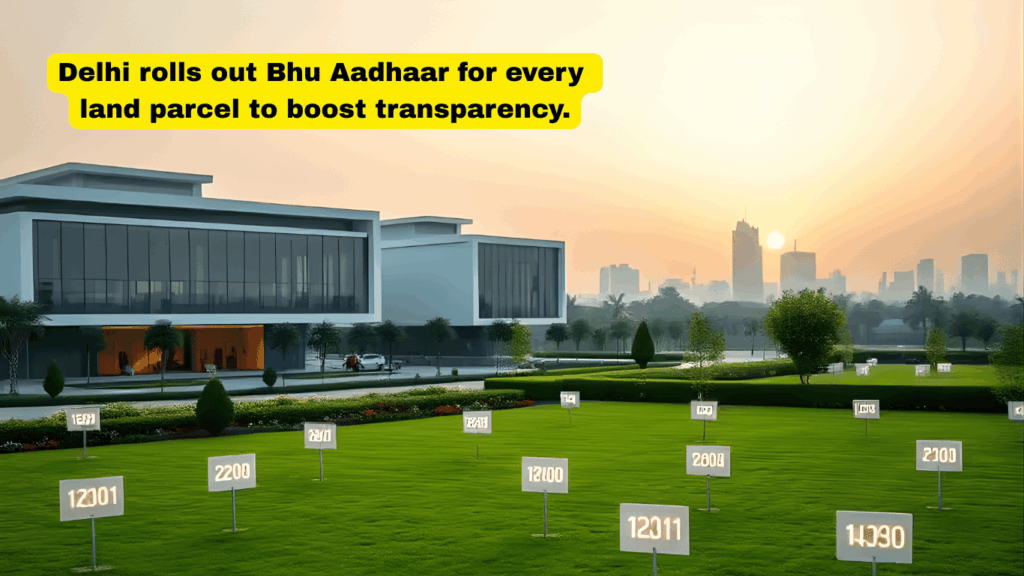
 Delhi Launches Bhu Aadhaar to Digitally Identify Every Land Parcel with 14-Digit Unique ID

Delhi Launches Bhu Aadhaar to Digitally Identify Every Land Parcel with 14-Digit Unique ID​

Delhi Launches Bhu Aadhaar to Digitally Identify Every Land Parcel with 14-Digit Unique ID New Delhi: In a major step towards land record reforms and digital governance, the Delhi government has launched Bhu Aadhaar, a 14-digit Unique Land Parcel Identification Number (ULPIN) system aimed at modernising land records and ensuring transparency in property ownership across the national capital. Announcing the initiative, Chief Minister Rekha Gupta said the move is designed to safeguard land ownership rights, reduce disputes, and bring greater accountability to property transactions. The system assigns a unique digital identity to every land parcel, similar in concept to the Aadhaar number issued to individuals, but specifically designed for immovable property. What is Bhu Aadhaar? Bhu Aadhaar is part of the broader land record digitisation framework being implemented under the Centre’s Digital India Land Records Modernization Programme (DILRMP). Under this initiative, each land parcel in Delhi will receive a 14-digit alphanumeric code that is geo-referenced and linked to ownership records, survey details, and registration data. The Unique Land Parcel Identification Number (ULPIN) will serve as a permanent digital identifier, enabling seamless integration of land-related databases across departments. Officials stated that the system will help eliminate duplication, fraudulent claims, and manipulation of land records, which have historically contributed to disputes and litigation. Objective Behind the Initiative The primary objective of Bhu Aadhaar is to make land records tamper-proof, transparent, and easily accessible. Over the years, Delhi has witnessed numerous property-related conflicts arising from outdated or incomplete records. Manual documentation and fragmented data across multiple departments often resulted in confusion and legal complications. By introducing a unified identification system, the government aims to: Digitally map every land parcel in Delhi Ensure real-time updates of ownership changes Reduce property fraud and illegal encroachments Simplify due diligence for buyers and financial institutions Strengthen urban planning and infrastructure development Chief Minister Rekha Gupta emphasized that safeguarding citizens’ property rights remains a top priority. She noted that digitisation will not only improve governance but also boost investor confidence in Delhi’s real estate sector. How the 14-Digit Number Works The 14-digit Bhu Aadhaar number is generated based on geo-coordinates obtained through advanced GIS (Geographic Information System) mapping. Each number reflects the exact location and boundaries of a land parcel, making it uniquely identifiable. Unlike traditional property identification methods that rely on plot numbers, khasra numbers, or local descriptions, the ULPIN is standardised and linked to digital maps. This ensures that even if administrative boundaries change or property subdivisions occur, the core identification remains intact. Officials clarified that the number will be integrated with existing land registration systems, municipal databases, and revenue department records to ensure a seamless transition. Benefits for Citizens For property owners, the introduction of Bhu Aadhaar is expected to significantly reduce bureaucratic hurdles. Citizens will be able to verify land ownership details online, track mutation status, and access property records without visiting multiple offices. The system is also expected to: Accelerate property transactions Improve access to bank loans through verified land records Reduce litigation arising from overlapping claims Enhance transparency in government land allocation Legal experts believe that the initiative will streamline dispute resolution mechanisms, as accurate digital records can serve as strong evidence in courts. Impact on Real Estate and Governance Delhi’s real estate sector, which has long grappled with issues related to unclear titles and documentation gaps, is likely to benefit from the reform. Developers and investors often face delays due to verification complexities. A centralised digital identification system could significantly cut down processing time and improve trust. Urban planners will also gain access to reliable spatial data, enabling better infrastructure development, zoning decisions, and land use management. Moreover, government agencies can monitor encroachments and unauthorised constructions more effectively through geo-tagged land data. Implementation Roadmap Officials indicated that the rollout will take place in phases, beginning with digitisation and geo-referencing of existing land records. Field surveys, satellite imaging, and GIS mapping will be used to verify parcel boundaries. The government is also expected to conduct awareness campaigns to educate citizens about the new system and guide them through verification processes. Property owners may be required to confirm or update certain details during the transition phase. Authorities assured that the implementation will follow strict data security protocols to protect ownership information and prevent misuse. Alignment with National Reforms The Bhu Aadhaar initiative aligns with the Union government’s push for land record reforms across India. Under DILRMP, states are being encouraged to adopt ULPIN-based identification to create a unified national land database. By implementing the system, Delhi joins other states that have begun integrating technology into land administration. The move reflects a broader shift toward digital governance and data-driven policymaking. Challenges Ahead While the initiative has been widely welcomed, experts caution that accurate mapping and verification will be critical to its success. Any discrepancies in geo-coordinates or legacy records could lead to confusion if not addressed carefully. Coordination among revenue departments, municipal bodies, and registration authorities will be essential for seamless data integration. Additionally, regular updates will be necessary to ensure the system reflects changes such as subdivisions, inheritance transfers, and redevelopment projects. A Step Toward Transparent Land Governance With Bhu Aadhaar, the Delhi government aims to usher in a new era of transparency and efficiency in land administration. By assigning a 14-digit digital identity to every land parcel, the initiative seeks to reduce fraud, strengthen property rights, and modernise governance in the national capital. As implementation progresses, the success of the programme will depend on technological accuracy, administrative coordination, and public cooperation. If executed effectively, Bhu Aadhaar could serve as a model for other urban centres across India striving to digitise and secure their land records. Related Posts All Posts Blogs Commercial L&T Realty Strategically acquires Land in Panvel signals New Growth Trajectory May 19, 2025/Read More Godrej Properties Bags 717 Crores worth 6.54 Acres land parcel from CIDCO inKharghar Navi Mumbai May 19, 2025/Read More

 Delhi Launches Bhu Aadhaar to Digitally Identify Every Land Parcel with 14-Digit Unique ID Read More »

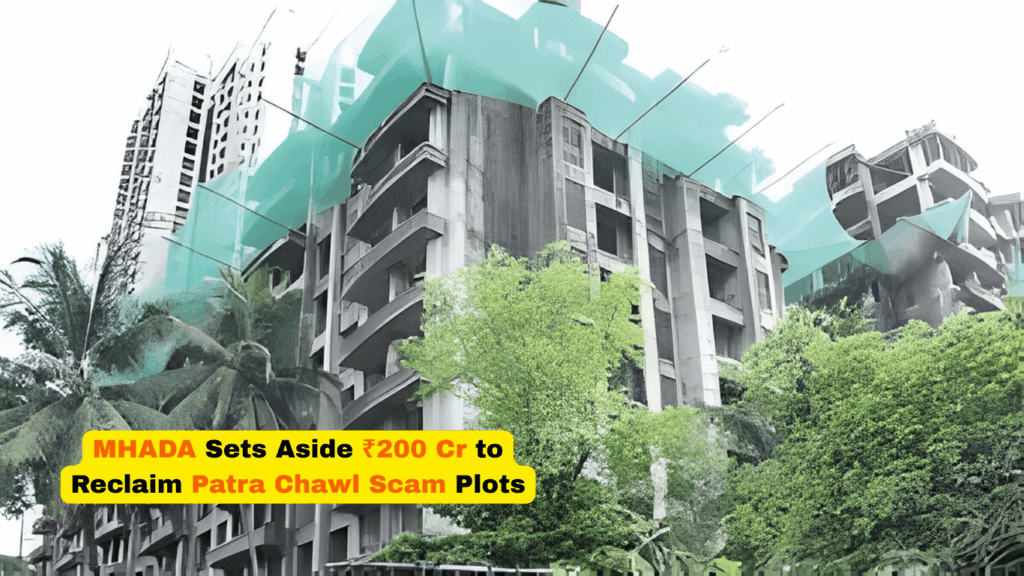
MHADA Allocates ₹200 Crore to Reclaim Plots Linked to Patra Chawl Scam in Mumbai​

MHADA Allocates ₹200 Crore to Reclaim Plots Linked to Patra Chawl Scam in Mumbai​

MHADA Allocates ₹200 Crore to Reclaim Plots Linked to Patra Chawl Scam in Mumbai Mumbai: The Maharashtra Housing and Area Development Authority (MHADA) has approved an allocation of nearly ₹200 crore to re-acquire three land parcels connected to the high-profile Patra Chawl redevelopment scam, estimated at ₹1,039 crore. The move marks a significant step toward restoring public assets that were allegedly diverted during the stalled redevelopment project. According to officials, the three plots were originally part of MHADA’s land bank but were later transferred and sold during the period when the Patra Chawl redevelopment was halted. The builder involved in the project reportedly sold nine plots to third parties, despite lacking legal authority to do so. MHADA’s decision to buy back the plots is aimed at safeguarding public housing interests and reviving long-delayed redevelopment plans. The authority is expected to complete the re-acquisition through legal and financial channels to ensure clear ownership before any future development is undertaken. The Patra Chawl project, located in Goregaon, was intended to redevelop old MHADA buildings and rehabilitate hundreds of tenants. However, delays, alleged financial irregularities, and unauthorised land transactions brought the project to a standstill, triggering investigations by enforcement agencies. Officials stated that reclaiming the land is critical for restarting redevelopment and delivering promised homes to affected residents. MHADA is also reviewing legal options to recover additional assets and prevent similar violations in future housing projects. The ₹200-crore allocation underscores the state government’s intent to reclaim misused public land and restore confidence in Mumbai’s affordable housing and redevelopment ecosystem. Related Posts All Posts Blogs Commercial L&T Realty Strategically acquires Land in Panvel signals New Growth Trajectory May 19, 2025/Read More Godrej Properties Bags 717 Crores worth 6.54 Acres land parcel from CIDCO inKharghar Navi Mumbai May 19, 2025/Read More

MHADA Allocates ₹200 Crore to Reclaim Plots Linked to Patra Chawl Scam in Mumbai​ Read More »

Mindspace Business Parks REIT Reports 28.7% YoY Growth in NOI in Q3 FY26​

Mindspace Business Parks REIT Reports 28.7% YoY Growth in NOI in Q3 FY26​

Mindspace Business Parks REIT Reports 28.7% YoY Growth in NOI in Q3 FY26 New Delhi: Mindspace Business Parks REIT (Mindspace REIT), one of India’s leading office-focused real estate investment trusts, has reported a strong financial performance for the third quarter of FY26, registering a 28.7% year-on-year increase in Net Operating Income (NOI). The robust growth highlights sustained demand for high-quality commercial office spaces across key Indian markets, driven by strong leasing activity, improved occupancies, and stable rental collections. The REIT’s performance during the quarter underscores the continued recovery and resilience of India’s commercial real estate sector, particularly in Grade A office assets located in established business districts. Strong Operating Performance Across Portfolio During Q3 FY26, Mindspace REIT benefited from consistent leasing momentum across its diversified portfolio, which spans major commercial hubs such as Mumbai, Pune, Hyderabad, Bengaluru, and Chennai. The increase in NOI was supported by a combination of higher occupancy levels, rental escalations, and improved operational efficiencies. The REIT’s well-balanced tenant mix, which includes multinational corporations, global capability centres (GCCs), and leading domestic enterprises, helped ensure stable cash flows. Long-term leases with built-in rental escalations further contributed to income growth during the quarter. Office Demand Remains Resilient India’s office market has seen a strong rebound over the past few quarters, led by rising demand from sectors such as technology, BFSI, engineering, consulting, and global shared services. Mindspace REIT has been a key beneficiary of this trend, with increased space take-up from both new and existing tenants. The continued expansion of global capability centres in India has played a significant role in driving office absorption, particularly in markets like Hyderabad and Pune, where Mindspace REIT has a strong presence. Companies are increasingly prioritising high-quality, sustainable office spaces that offer modern infrastructure and superior workplace amenities—an area where the REIT’s assets are well positioned. Occupancy and Leasing Momentum Higher occupancy levels across the portfolio were a major contributor to the year-on-year NOI growth. Mindspace REIT has maintained healthy occupancy rates, supported by proactive leasing strategies and strong tenant relationships. During the quarter, the REIT witnessed renewed leasing interest from occupiers seeking to consolidate operations or expand their India footprint. Renewals at higher rentals and new leases signed at market-linked rates further strengthened revenue visibility. Focus on Sustainability and Asset Quality Mindspace REIT continues to focus on sustainability, ESG compliance, and asset enhancement initiatives, which have become increasingly important for corporate occupiers. Several of the REIT’s office parks are certified green buildings, offering energy-efficient systems, water conservation measures, and employee-friendly designs. These sustainability-led initiatives not only enhance the attractiveness of assets but also help in reducing operating costs over the long term, positively impacting NOI margins. Financial Stability and Distributions The strong growth in operating income reinforces Mindspace REIT’s ability to generate stable and predictable cash flows. The REIT has maintained prudent financial management, with a focus on maintaining healthy leverage levels and ensuring adequate liquidity. Higher NOI improves the REIT’s capacity to deliver consistent distributions to unitholders, making it an attractive investment option amid ongoing volatility in global markets. Institutional and retail investors continue to view REITs as a stable yield-generating asset class, particularly in a high-interest-rate environment. Related Posts All Posts Blogs Commercial L&T Realty Strategically acquires Land in Panvel signals New Growth Trajectory May 19, 2025/Read More Godrej Properties Bags 717 Crores worth 6.54 Acres land parcel from CIDCO inKharghar Navi Mumbai May 19, 2025/Read More

Mindspace Business Parks REIT Reports 28.7% YoY Growth in NOI in Q3 FY26​ Read More »

Lodha Developers’ Net Debt Surges ₹800 Cr in Q3 FY26 Amid Aggressive Land Acquisitions​

Lodha Developers’ Net Debt Surges ₹800 Cr in Q3 FY26 Amid Aggressive Land Acquisitions​

Lodha Developers’ Net Debt Surges ₹800 Cr in Q3 FY26 Amid Aggressive Land Acquisitions Mumbai, January 18, 2026: Lodha Developers Ltd has reported a sharp rise in net debt, which climbed 15% to ₹6,170 crore during Q3 FY26. The increase is attributed to aggressive land acquisitions across key markets including Mumbai Metropolitan Region (MMR), Delhi-NCR, and Bengaluru. The company acquired five new land parcels during the quarter, both through outright purchases and partnerships, aimed at developing residential and commercial projects with an estimated revenue potential of ₹33,800 crore. Lodha Developers, a leading real estate brand, highlighted that despite the significant investment, its net debt remains well below the ceiling of 0.5x net debt-to-equity, reflecting a controlled financial strategy. Last month, the company also partnered with MRG Group to enter the Delhi-NCR market, marking its foray into housing and commercial real estate in Gurugram. Lodha continues to maintain a strong presence in MMR, Pune, and Bengaluru. The company’s sales bookings rose to ₹17,630 crore in the last fiscal year, up from ₹14,520 crore, with a target of ₹21,000 crore for the current financial year. Since inception, Lodha has delivered 110 million sq. ft. of real estate and is currently developing over 130 million sq. ft. under ongoing and planned projects. Lodha Developers continues to focus on a mix of luxury and mid-segment housing, while selectively entering commercial real estate markets. The company’s expansion strategy is designed to balance short-term sales growth with long-term asset appreciation. By acquiring prime land in key urban corridors, Lodha aims to create integrated townships and high-value residential projects that cater to India’s growing urban population and rising disposable incomes. Analysts suggest that while the rise in debt may appear concerning at first glance, it is a strategic move to secure prime land assets ahead of expected market appreciation. With India’s real estate sector showing steady demand, especially in metro cities, Lodha’s long-term growth prospects remain strong. Since its inception, Lodha Developers has delivered over 110 million sq. ft. of residential and commercial real estate and currently has more than 130 million sq. ft. under development. The company’s portfolio includes luxury apartments, integrated townships, commercial spaces, and co-working solutions, catering to premium and mid-segment buyers alike. Despite the rise in net debt, Lodha’s financial position remains robust. The company continues to operate well within its debt-to-equity limits, with a net debt-to-equity ratio comfortably below 0.5x. During the last fiscal year, Lodha Developers’ sales bookings increased to ₹17,630 crore, up from ₹14,520 crore, indicating strong market demand for its projects. The company has set an ambitious target of ₹21,000 crore for FY26, driven by ongoing and upcoming developments across MMR, Pune, Bengaluru, and Delhi-NCR. Lodha Developers has been actively expanding its land bank to capitalize on rising demand for premium housing and commercial spaces. The company’s focus remains on high-growth urban markets where it can leverage its brand reputation to deliver large-scale, high-quality projects. In Mumbai, Lodha acquired prime parcels in Andheri East and Lower Parel, reinforcing its leadership in the luxury residential segment. In Delhi-NCR, the company partnered with MRG Group to enter Gurugram, while in Bengaluru, it secured land for both residential and mixed-use developments. These acquisitions are expected to generate a strong pipeline of projects over the next 3–5 years, contributing significantly to revenue growth and market share expansion. Our Q3 performance reflects our long-term growth strategy. While debt has increased due to targeted land acquisitions, these investments position us well to meet future demand in India’s top real estate markets,” said a senior company official       Related Posts All Posts Blogs Commercial L&T Realty Strategically acquires Land in Panvel signals New Growth Trajectory May 19, 2025/Read More Godrej Properties Bags 717 Crores worth 6.54 Acres land parcel from CIDCO inKharghar Navi Mumbai May 19, 2025/Read More

Lodha Developers’ Net Debt Surges ₹800 Cr in Q3 FY26 Amid Aggressive Land Acquisitions​ Read More »

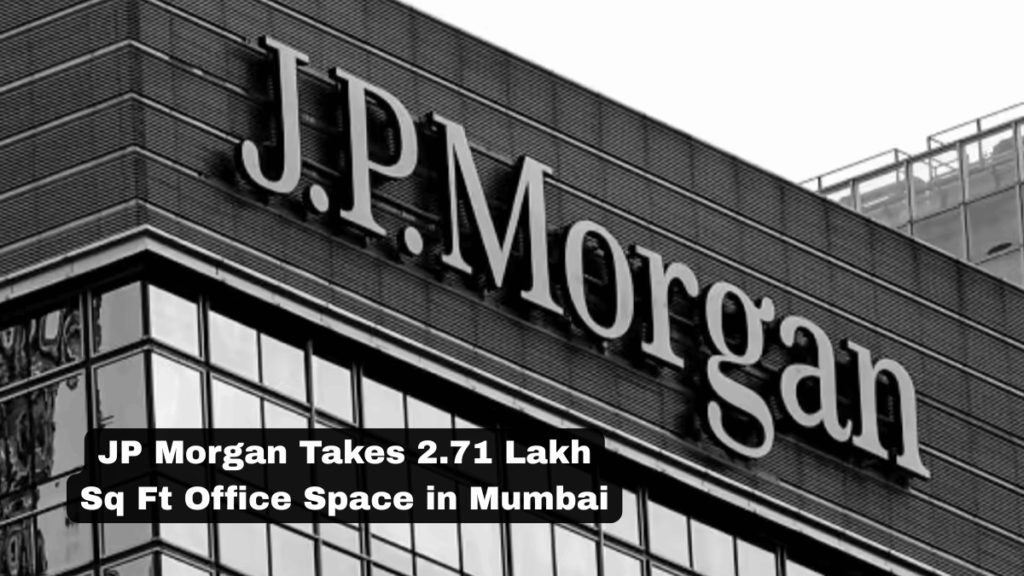
JP Morgan Leases 2.71 Lakh Sq Ft Office Space From Cowrks in Mumbai at ₹9.23 Crore Monthly Rent​

JP Morgan Leases 2.71 Lakh Sq Ft Office Space From Cowrks in Mumbai at ₹9.23 Crore Monthly Rent​

JP Morgan Leases 2.71 Lakh Sq Ft Office Space From Cowrks in Mumbai at ₹9.23 Crore Monthly Rent JP Morgan Services India Pvt Ltd has leased 2.71 lakh square feet of premium office space in Mumbai from Cowrks at a monthly rental of over ₹9 crore, marking one of the largest commercial leasing transactions in the city in recent months. The deal highlights the continued demand for Grade-A office spaces by global financial institutions expanding their India operations. The office space is located at One Downtown Central (formerly CRISIL House) in Powai, a key commercial hub that has emerged as a preferred destination for multinational companies due to its strong infrastructure, connectivity and proximity to talent pools. The property is owned by Kairos Properties Pvt Ltd, an entity backed by Brookfield Properties. As per lease documents, the agreement was signed in December 2025, with the lease scheduled to commence from April 1, 2026. The total leased area measures approximately 2,71,955 sq ft, spread across multiple floors of the building. JP Morgan will pay a monthly rent of around ₹9.23 crore, translating to an average rental value of about ₹339 per sq ft. The lease tenure is five years, with a built-in 5% annual rental escalation, reflecting strong confidence in the long-term growth prospects of Mumbai’s commercial real estate market. The office will be operated under Cowrks’ managed workspace model, enabling JP Morgan to access fully serviced, ready-to-use office infrastructure while maintaining operational flexibility and reducing upfront capital expenditure. Industry experts note that large-scale leasing activity by global BFSI firms signals renewed momentum in Mumbai’s office market, particularly in established micro-markets like Powai. The transaction also reinforces the growing preference for flexible and managed office solutions among multinational occupiers. With steady demand from global corporations and limited supply of quality office stock, Mumbai’s commercial real estate sector is expected to remain resilient, supported by long-term leasing commitments from international players.   Related Posts All Posts Blogs Commercial L&T Realty Strategically acquires Land in Panvel signals New Growth Trajectory May 19, 2025/Read More Godrej Properties Bags 717 Crores worth 6.54 Acres land parcel from CIDCO inKharghar Navi Mumbai May 19, 2025/Read More

JP Morgan Leases 2.71 Lakh Sq Ft Office Space From Cowrks in Mumbai at ₹9.23 Crore Monthly Rent​ Read More »

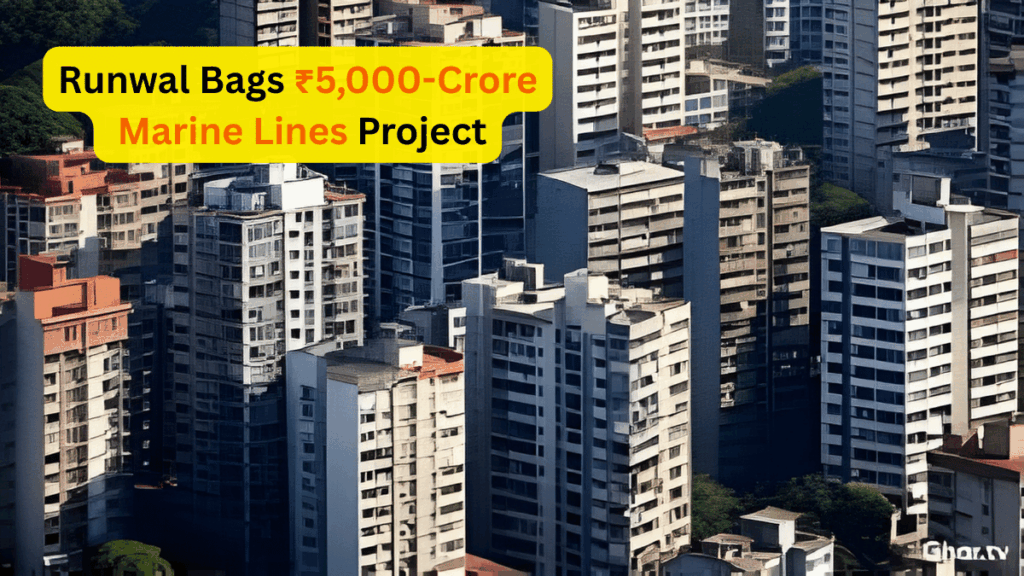
Runwal Enterprises Secures ₹5,000-Crore Cluster Redevelopment in Marine Lines

Runwal Enterprises Secures ₹5,000-Crore Cluster Redevelopment in Marine Lines

Runwal Enterprises Secures ₹5,000-Crore Cluster Redevelopment in Marine Lines Mumbai, January 2026 – Real estate giant Runwal Enterprises has officially secured a ₹5,000-crore cluster redevelopment project in Marine Lines, marking one of the most significant urban transformation initiatives in South Mumbai. The project aims to revamp aging residential structures into modern, high-rise, and sustainable living spaces, addressing both housing quality and cityscape modernization. The redevelopment will cover multiple old residential clusters in the Marine Lines area, with plans to introduce state-of-the-art amenities, green spaces, and enhanced infrastructure, aligning with Mumbai’s vision for sustainable urban living. This project is expected to create thousands of new residential units, offering contemporary homes to residents while ensuring compliance with safety and environmental standards. Commenting on the milestone, Mr. Ajay Runwal, Chairman of Runwal Enterprises, said, “This redevelopment is a testament to our commitment to reshaping Mumbai’s skyline and enhancing the quality of life for its residents. We aim to combine modern architectural design with sustainable practices, making Marine Lines a benchmark for urban transformation.” The redevelopment aligns with Mumbai’s cluster redevelopment initiative, which encourages private developers to replace dilapidated buildings with modern residential complexes while providing rehabilitation to existing residents. The Marine Lines project is expected to generate substantial employment opportunities during construction and contribute significantly to the local economy. With a project valuation of ₹5,000 crore, this cluster redevelopment will also incorporate smart infrastructure features such as energy-efficient systems, rainwater harvesting, and modern community facilities, positioning it as a pioneering urban renewal project in the city. Runwal Enterprises, known for landmark residential and commercial developments across Mumbai, continues to strengthen its portfolio in high-value urban redevelopment projects, reinforcing its role as a leader in modernizing Mumbai’s urban landscape. Related Posts All Posts Blogs Commercial L&T Realty Strategically acquires Land in Panvel signals New Growth Trajectory May 19, 2025/Read More Godrej Properties Bags 717 Crores worth 6.54 Acres land parcel from CIDCO inKharghar Navi Mumbai May 19, 2025/Read More

Runwal Enterprises Secures ₹5,000-Crore Cluster Redevelopment in Marine Lines Read More »

Chennai Housing & Commercial Property Market Sees Strong Growth in 2025​

Chennai's Property Market Thrives with Strong Demand for Housing and Commercial Spaces

Chennai Housing & Commercial Property Market Sees Strong Growth in 2025 Chennai’s real estate sector is witnessing a remarkable surge, as the Chennai Housing & Commercial Property Market Sees Strong Growth in 2025. According to a recent report by Anarock, the city’s housing supply reached 19,675 units in the first nine months of 2025, a 15% increase from last year. Housing sales also saw a significant rise, totaling 15,720 units, reflecting a market primarily driven by end-users rather than speculative buyers. The report, titled “Real Estate and Infrastructure Driving Growth in Tamil Nadu”, was released during the Real Estate and Infrastructure Summit in Chennai. It highlighted South Chennai as the dominant market region, contributing nearly three-quarters of all new launches this year. Developers are particularly active along the OMR and GST corridors, delivering new residential projects to meet growing demand. Anuj Puri, Chairman and Founder of Anarock Group, noted that property prices have risen by 38% over the past five years, currently standing at Rs 7,010 per square foot. Despite this increase, absorption rates remain strong, leaving Chennai with the second-lowest unsold stock among major metros, signaling a healthy and sustainable market. Commercial Property Market Growth The commercial property sector in Chennai is also thriving. Net absorption reached 4.6 million square feet in the first nine months of 2025, already matching last year’s full-year performance and on track to reach a seven-year high. This growth is largely driven by the proliferation of Global Capability Centers (GCCs) in Tamil Nadu, with Chennai hosting 10% of India’s total GCC footprint. Coimbatore has also emerged as a preferred Tier-II destination for new GCC setups. Challenges Facing the Market Despite robust growth, the sector faces challenges. Rising raw material costs have impacted the pricing of affordable homes, while industry leaders emphasize the need for streamlined project approvals. Regulatory and administrative reforms could further strengthen the market’s growth trajectory. Economic Outlook Shiv Das Meena, Chairman of the Tamil Nadu Real Estate Regulatory Authority (TNRERA), highlighted Tamil Nadu’s impressive GDP growth of 11.19%, well above the national average of 6.5%. This strong economic performance is expected to fuel residential and commercial property demand in the coming years. Conclusion The Chennai Housing & Commercial Property Market Sees Strong Growth, driven by increasing residential demand, thriving commercial absorption, and a supportive economic environment. While challenges like rising construction costs and regulatory hurdles exist, the market outlook remains positive, positioning Chennai as a key real estate hub in India. Related Posts All Posts Blogs Commercial L&T Realty Strategically acquires Land in Panvel signals New Growth Trajectory May 19, 2025/Read More Godrej Properties Bags 717 Crores worth 6.54 Acres land parcel from CIDCO inKharghar Navi Mumbai May 19, 2025/Read More

Chennai Housing & Commercial Property Market Sees Strong Growth in 2025​ Read More »

Index
Fractional real estate is filling fast 
Enquire Now….. before it’s gone!