Table of Contents
ToggleMumbai Redevelopment Debris Scandal
Mumbai: A major environmental controversy has erupted in India’s financial capital after authorities uncovered large-scale violations in the handling of construction and demolition (C&D) waste generated by nearly 2,000 redevelopment projects across the city. The issue, described by civic officials as a serious lapse in compliance, has put the spotlight on waste management practices amid Mumbai’s ongoing redevelopment boom.
The matter came to light after the Brihanmumbai Municipal Corporation (BMC) began investigating irregularities linked to debris disposal from redevelopment sites. Preliminary findings suggest that significant quantities of construction waste were allegedly dumped without following mandatory environmental norms.
Scale of the Problem
Mumbai has been undergoing rapid redevelopment over the past decade. Thousands of aging residential buildings, especially in densely populated suburbs and island city areas, are being demolished and reconstructed under various redevelopment schemes. This surge in activity has inevitably led to a dramatic rise in construction and demolition waste.
C&D waste includes concrete, bricks, steel, wood, plaster, soil, and other materials generated during demolition and construction activities. If processed properly, much of this material can be recycled and reused. However, authorities suspect that in many cases, debris was not transported to authorized recycling facilities as required under the Construction and Demolition Waste Management Rules.
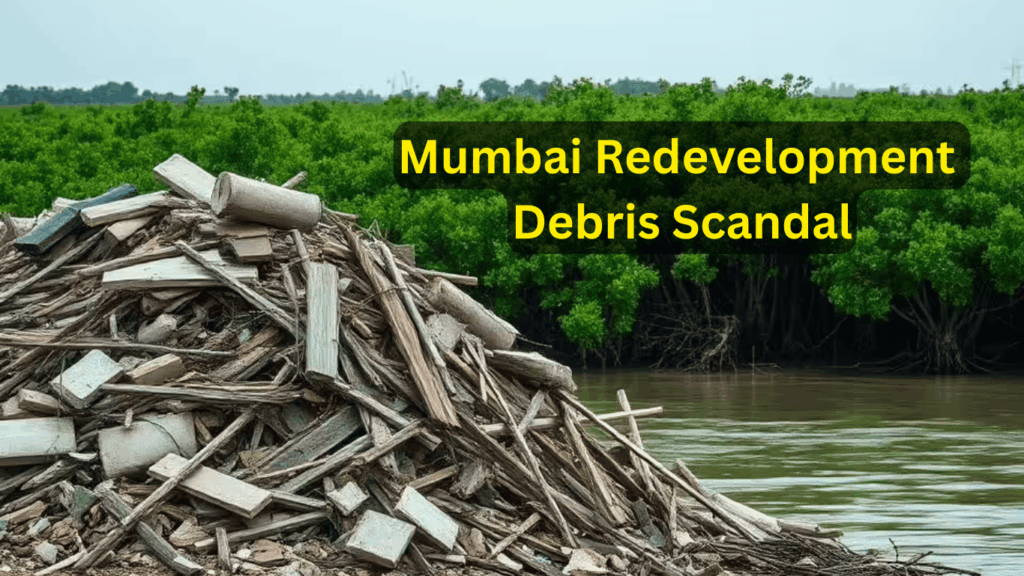
Instead, contractors and developers allegedly disposed of the waste at unauthorized locations, including open plots, roadside areas, mangroves, creeks, and low-lying land parcels.
Environmental and Urban Impact
Illegal dumping of construction debris poses serious environmental and civic risks. Mumbai, a coastal metropolis already vulnerable to flooding, relies heavily on its natural drainage systems, wetlands, and mangrove belts to manage heavy monsoon rainfall. Dumped debris can block stormwater drains and natural water channels, worsening the city’s flood risk.
Environmental experts warn that filling low-lying areas with debris disrupts natural water flow and reduces soil absorption capacity. This can contribute to waterlogging during monsoons, increasing inconvenience for residents and putting infrastructure under strain.
Additionally, dumping in mangrove areas threatens fragile coastal ecosystems. Mangroves serve as natural barriers against storm surges and play a vital role in maintaining ecological balance. Unauthorized debris disposal in such zones can cause irreversible environmental damage.
Air pollution is another concern. Construction waste, when left uncovered, generates dust that contributes to poor air quality. Fine particulate matter from debris can pose health risks, particularly for children, the elderly, and individuals with respiratory conditions.
Regulatory Framework and Alleged Violations
India’s Construction and Demolition Waste Management Rules mandate that developers ensure proper segregation, transportation, and disposal of debris at designated processing facilities. Large projects are required to submit waste management plans and maintain records of disposal.
The BMC has reportedly found discrepancies between declared waste volumes and actual transportation records in several redevelopment projects. In some cases, officials suspect that contractors bypassed official disposal channels to cut costs.
Proper disposal involves transporting debris to authorized recycling plants, where it is processed into reusable materials such as recycled aggregates, paving blocks, and construction-grade sand. Failure to comply not only violates municipal regulations but also undermines sustainability goals.
Civic authorities are now reviewing documentation from nearly 2,000 redevelopment projects to assess the extent of non-compliance.
Redevelopment Boom Under Scrutiny
Mumbai’s redevelopment drive has been fueled by the need to replace dilapidated structures, improve housing standards, and optimize land use in a land-scarce city. Thousands of housing societies have opted for redevelopment to gain modern amenities, larger apartments, and improved safety standards.
However, the latest revelations raise concerns about whether regulatory oversight has kept pace with the rapid expansion of redevelopment activity.
Urban planning experts argue that while redevelopment is essential for Mumbai’s growth, it must be accompanied by strict environmental safeguards. Failure to enforce waste management norms not only harms the environment but also erodes public trust in the redevelopment process.
The controversy may also slow down approvals for new projects as authorities tighten scrutiny and introduce additional compliance requirements.
Civic Action and Possible Penalties
The Brihanmumbai Municipal Corporation has initiated inspections and is reportedly identifying developers, contractors, and project management agencies responsible for violations. Officials have indicated that stringent action could follow if wrongdoing is established.
Potential penalties may include heavy fines, blacklisting of contractors, suspension of work permits, and legal proceedings under environmental protection laws. Authorities are also considering stricter monitoring mechanisms, including GPS tracking of debris transportation vehicles and digital waste tracking systems.
Experts suggest that stronger enforcement, combined with technological solutions, can significantly reduce illegal dumping. Regular audits and public disclosure of compliance records could further enhance accountability.
The Way Forward: Sustainable Construction Practices
The scandal has reignited discussions about sustainable construction practices in India’s urban centers. As cities expand and infrastructure projects multiply, managing construction waste efficiently has become a pressing challenge.
Recycling construction debris offers both environmental and economic benefits. Recycled aggregates can reduce dependence on natural sand and stone, conserving natural resources and lowering construction costs. Several Indian cities have established C&D waste recycling plants, but effective utilization depends on strict compliance and awareness among developers.
Environmentalists recommend that authorities:
- Enforce strict monitoring of waste transportation
- Increase penalties for violations to deter non-compliance
- Encourage on-site segregation of construction waste
- Promote the use of recycled construction materials
- Strengthen coordination between civic bodies and environmental regulators
Public participation is also crucial. Residents and housing societies undergoing redevelopment can demand transparency from developers regarding waste disposal practices.
Broader Implications for Urban Governance
The debris management controversy highlights a broader governance challenge facing rapidly urbanizing cities. Infrastructure growth must be balanced with environmental sustainability and transparent regulatory enforcement.
Mumbai’s experience could serve as a cautionary tale for other metropolitan regions undergoing large-scale redevelopment. Without robust systems in place, the environmental cost of urban transformation can outweigh its benefits.
As investigations continue, stakeholders across the construction ecosystem — including developers, contractors, regulators, and residents — will be closely watching the outcome. The findings could reshape how redevelopment projects are monitored and regulated in the future.
Conclusion
The exposure of alleged large-scale construction debris mismanagement in Mumbai marks a significant moment for the city’s redevelopment journey. While modernization and infrastructure upgrades remain essential, adherence to environmental norms cannot be compromised.
With nearly 2,000 projects under scrutiny, the coming weeks are likely to see intensified inspections, regulatory tightening, and possible legal action. The episode underscores the urgent need for stronger oversight, transparent practices, and sustainable waste management systems.
As Mumbai continues to rebuild and expand, ensuring responsible construction practices will be critical to safeguarding both the environment and the city’s long-term resilience.
Related Posts
- All Posts
- Blogs
- Commercial